Argentium Silver vs. Sterling Silver: Which Is Better?
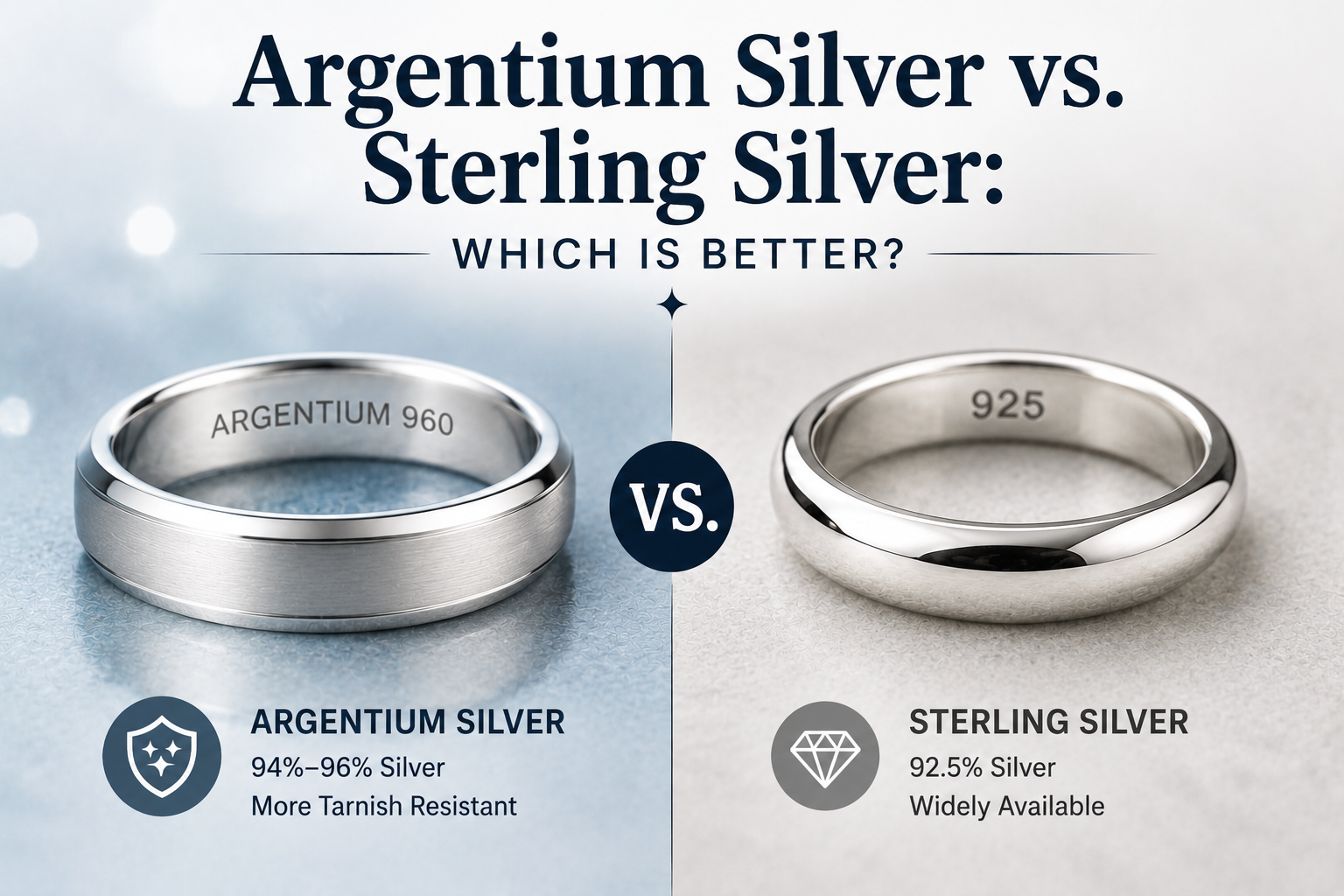
Argentium Silver vs. Sterling Silver: Which Is Better?

In the Argentium silver vs sterling silver comparison, Argentium offers greater tarnish resistance and higher silver purity, while traditional sterling is more widely available and recognized by its familiar 925 standard. Current Argentium alloys come in 940 and 960 grades, containing 94% and 96% silver respectively, while sterling contains at least 92.5% silver.  Argentium is especially … Read more
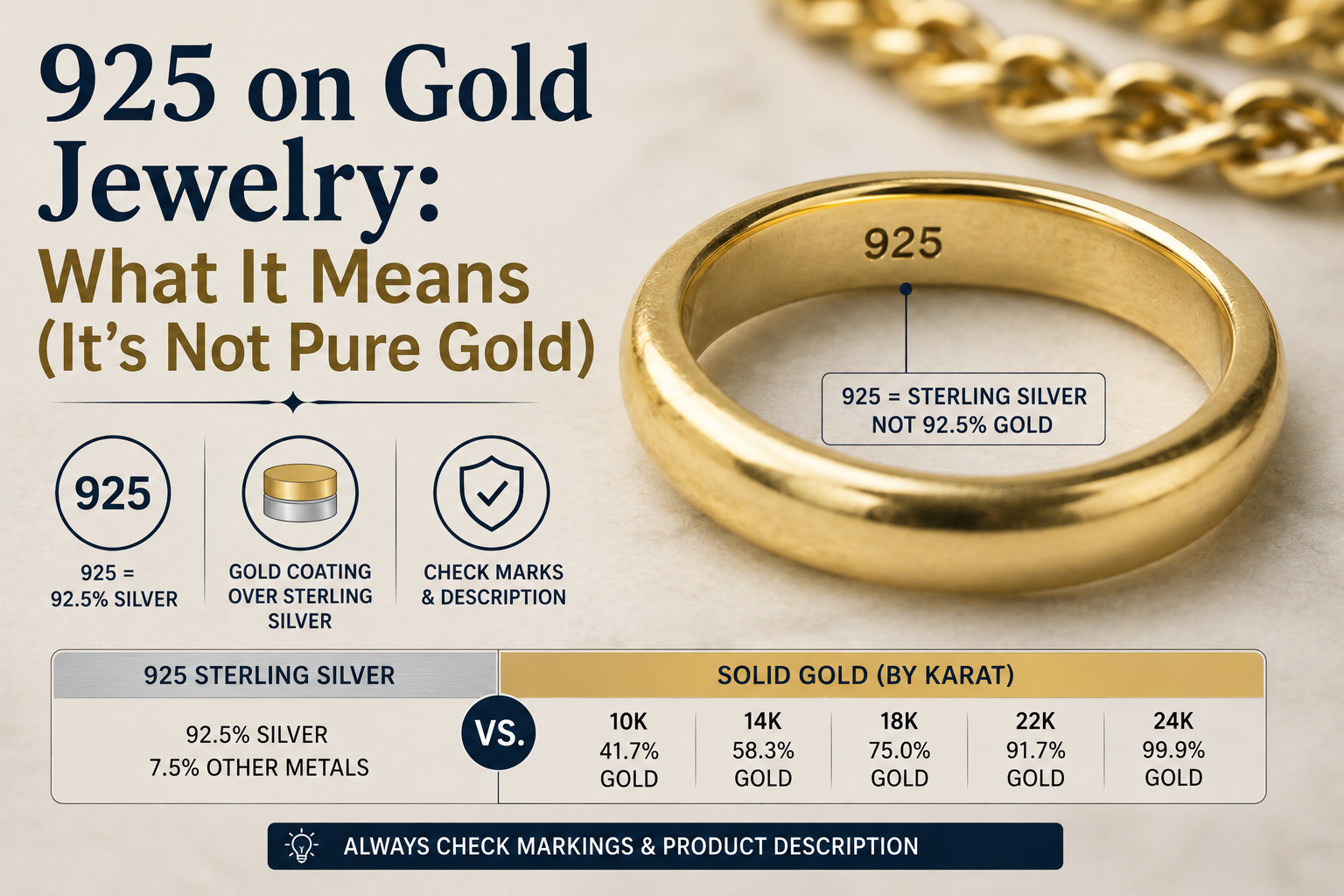
925 on Gold Jewelry: What It Means (It’s Not Pure Gold)

925 on Gold Jewelry: What It Means (It's Not Pure Gold)

The 925 gold meaning is usually that the jewelry has a sterling-silver base, not that it contains 92.5% gold. A 925stamp means the marked metal is represented as 925 parts silver per 1,000, or 92.5% silver.  If the jewelry looks yellow or rose gold, it may have a gold coating over sterling silver. The 925 stamp itself, however, does … Read more

What Does 925 Mean on a Ring?

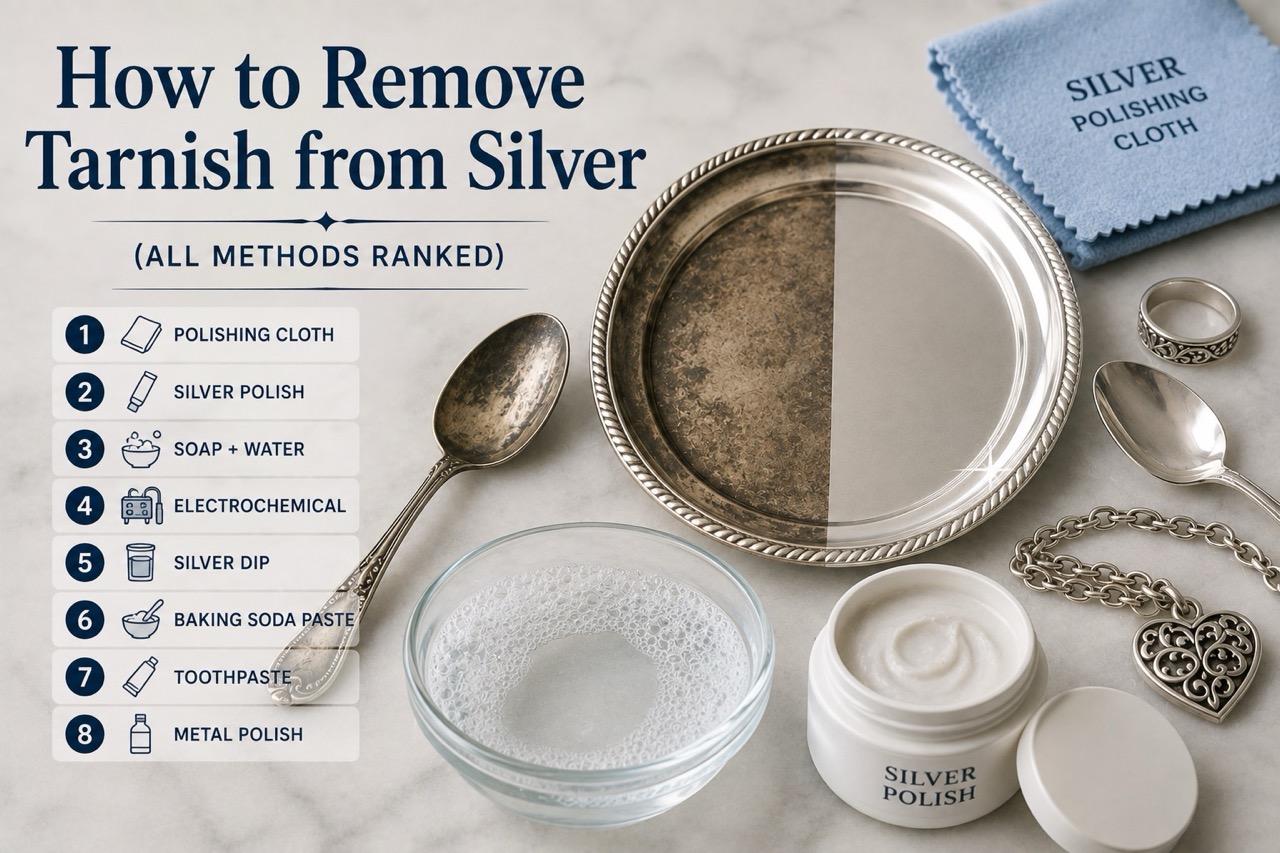
How to Remove Tarnish from Silver

A 925 stamp on a ring means the piece is marked as 92.5% silver, the fineness associated with sterling silver. In other words, the alloy contains 925 parts silver per 1,000 parts total, with the remaining 7.5% made from other metals, commonly including copper. You will often find 925 inside the ring band, sometimes beside a maker’s mark, … Read more

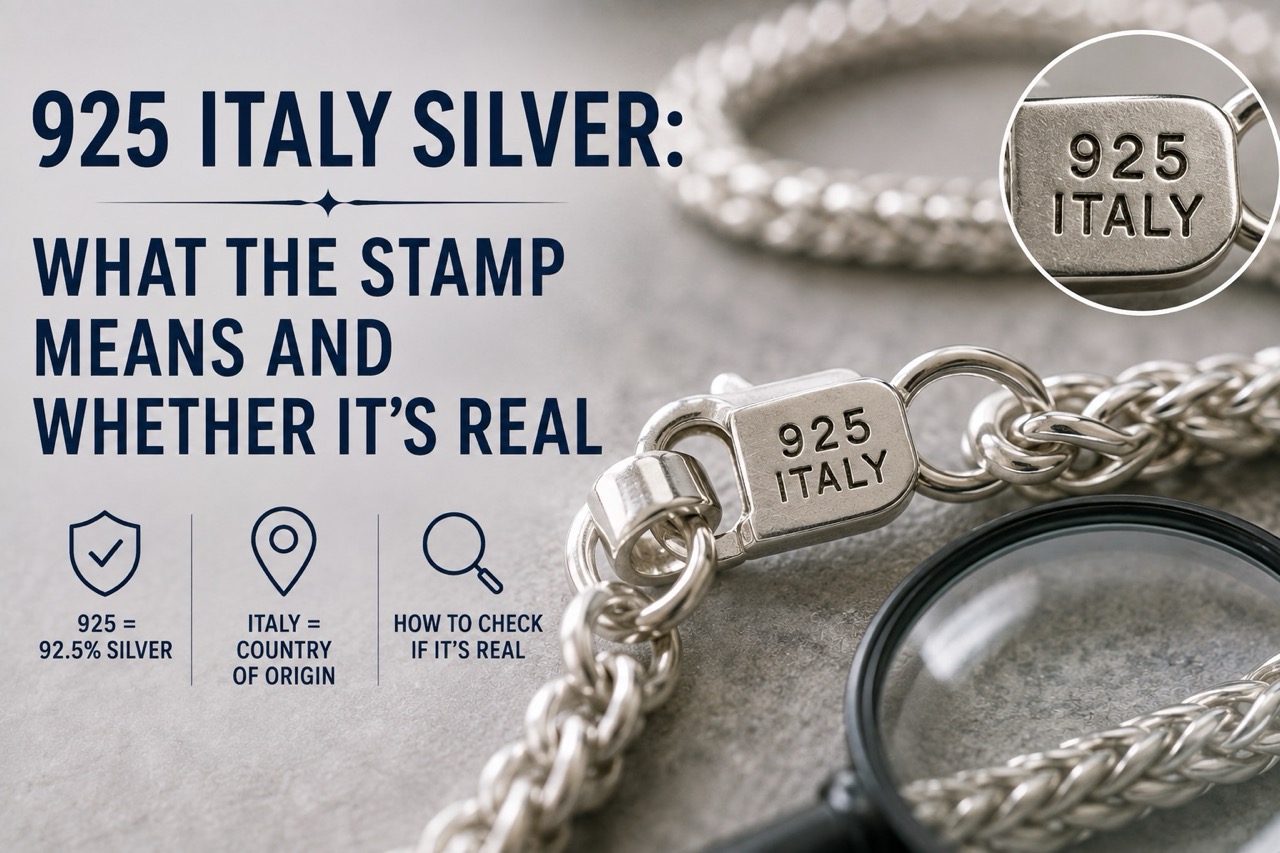
925 Italy Silver: What the Stamp Means and Whether It’s Real

925 Italy Silver

A 925 Italy stamp represents a claim that the item is 92.5% silver and Italian in origin. The 925 means 925 parts of silver per 1,000 parts of alloy, while Italy indicates the stated country of origin. It is not a separate or higher grade of sterling silver. Italy officially recognizes 925 fineness for silver, along with 800 fineness. Modern Italian precious-metal … Read more

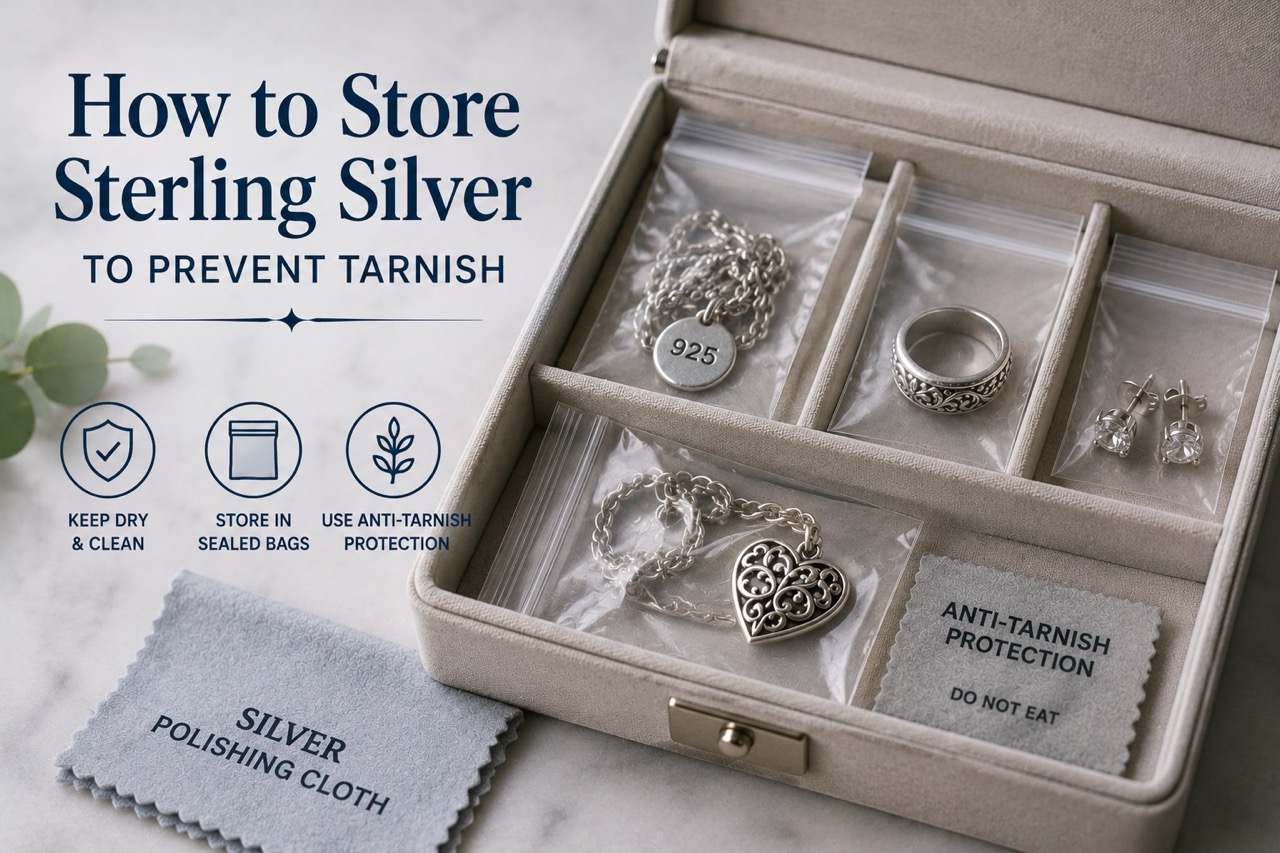
How to Store Sterling Silver to Prevent Tarnish

How to Store Sterling Silver to Prevent Tarnish

The best way to store sterling silver is clean, dry, and protected from tarnishing gases inside a closed container or sealed polyethylene bag. Keep individual pieces separated to prevent scratches and tangled chains, and consider an appropriate anti-tarnish material inside the enclosed storage space. Sterling silver contains 92.5% silver and 7.5% other metals, commonly copper. It … Read more

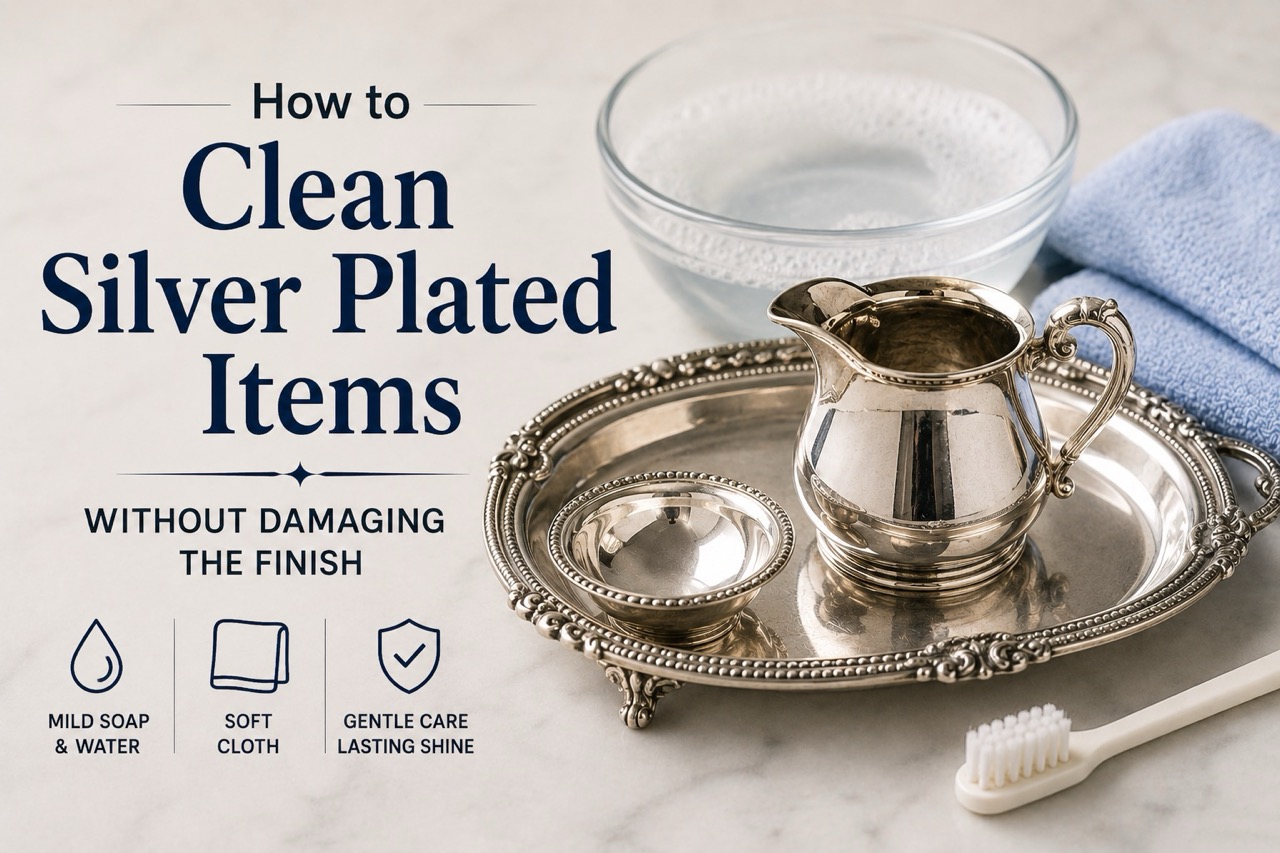
How to Clean Silver Plated Items Without Damaging the Finish

How to Clean Silver Plated Items

The safest way to clean silver plated items is to remove ordinary dirt with mild soap, water, and a soft cloth when the object’s construction allows it, then remove tarnish only when necessary. Silver plate has a thin layer of silver over another metal, so repeated polishing can eventually wear through that layer. That makes silver … Read more

How to Clean Silver Jewelry at Home

The safest way to clean silver jewelry at home is to start with warm water, mild soap, and a soft cloth. This removes skin oils, cosmetics, and ordinary grime without unnecessary abrasion. If sterling silver remains tarnished after washing, use a silver-polishing cloth or a polish made specifically for silver. The right method depends on what … Read more

Can You Shower With Sterling Silver?

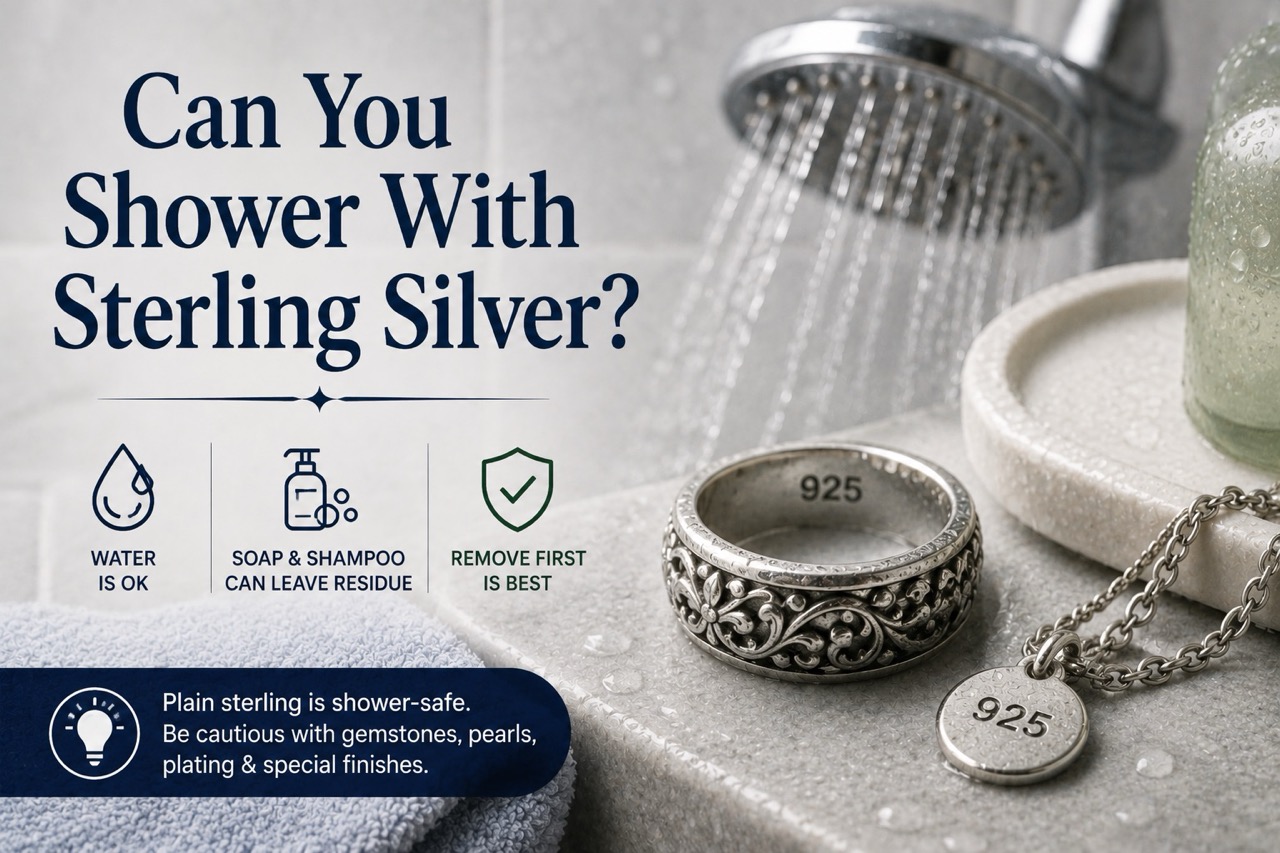
Can You Shower With Sterling Silver?

Yes, you can shower with plain sterling silver, and an occasional shower is unlikely to damage genuine 925 jewelry.However, removing your jewelry first is the better routine because soaps, shampoos, conditioners, and other products can leave residue or expose the metal to unnecessary chemicals. Sterling contains 92.5% silver and 7.5% other metals, commonly copper. Ordinary … Read more

Is Sterling Silver Hypoallergenic?

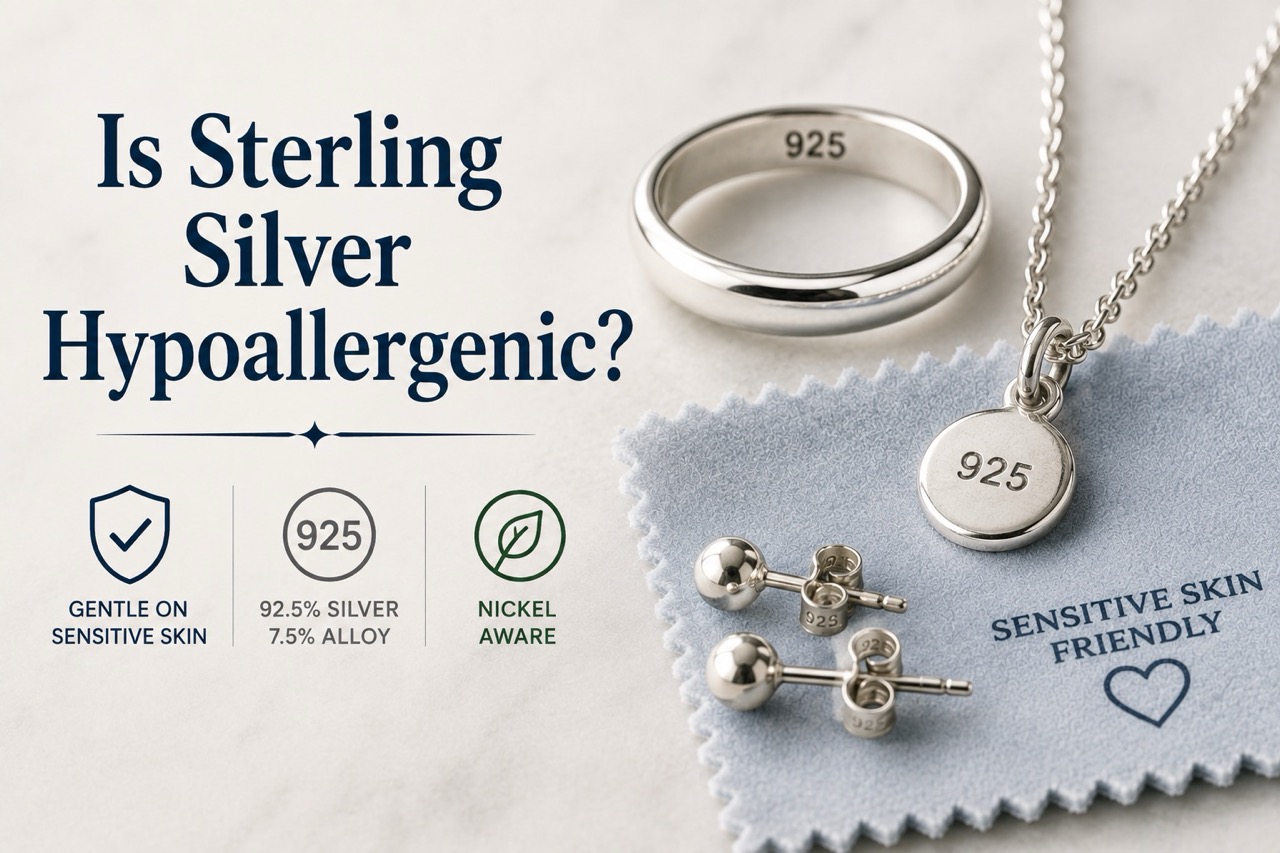
Is Sterling Silver Hypoallergenic?

Sterling silver is generally a good jewelry choice for sensitive skin, and dermatology guidance includes sterling among options for people trying to avoid nickel. However, “hypoallergenic” does not mean allergy-proof, and a 925 stamp alone cannot tell you the composition of every part of a finished piece. Genuine sterling contains 92.5% silver and 7.5% other metals, … Read more

Does Sterling Silver Turn Green?

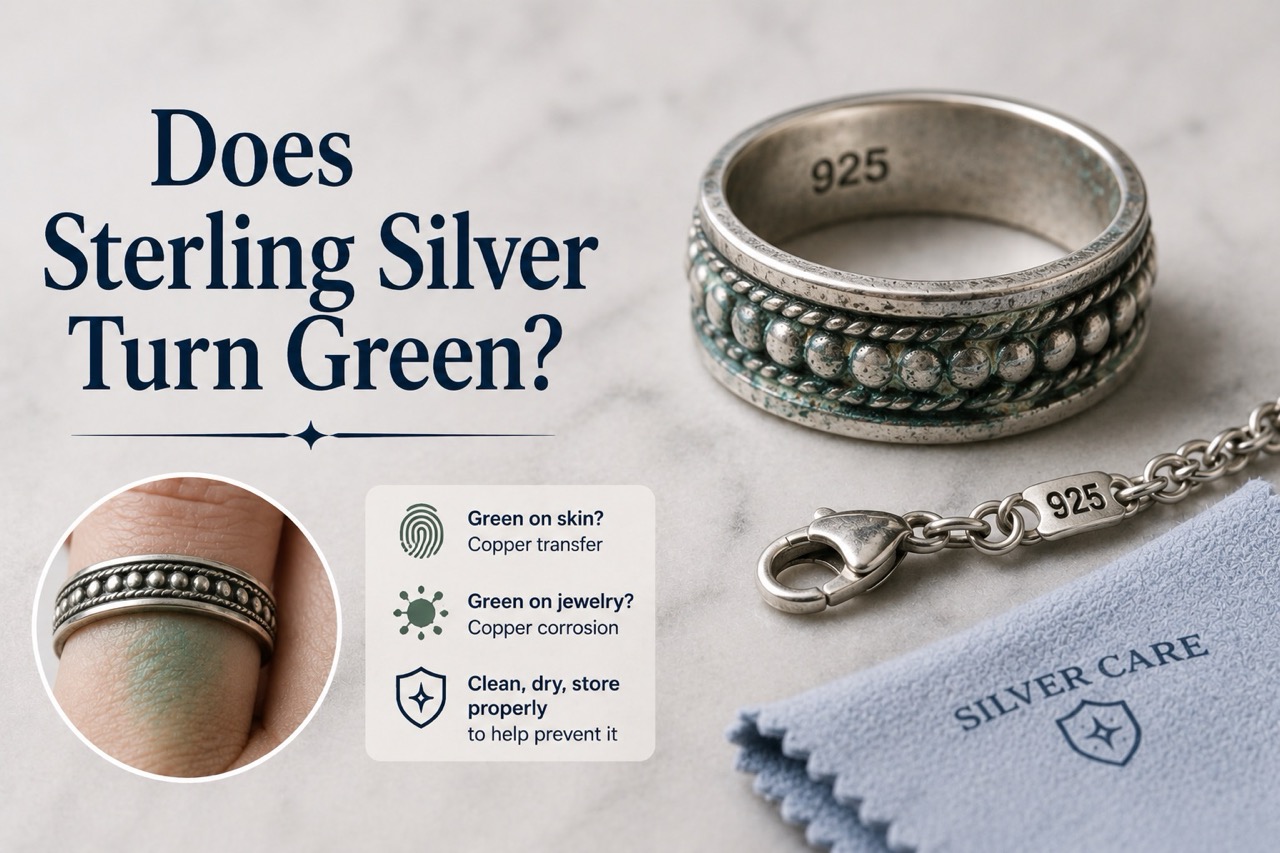
Does Sterling Silver Turn Green?

Yes, sterling silver can develop green corrosion products or leave greenish marks on your skin because sterling commonly contains copper. Sterling is 92.5% silver and 7.5% other metals, with copper commonly making up much of that alloying portion. Silver itself characteristically develops dark sulfide tarnish rather than green corrosion. The green color associated with some sterling … Read more