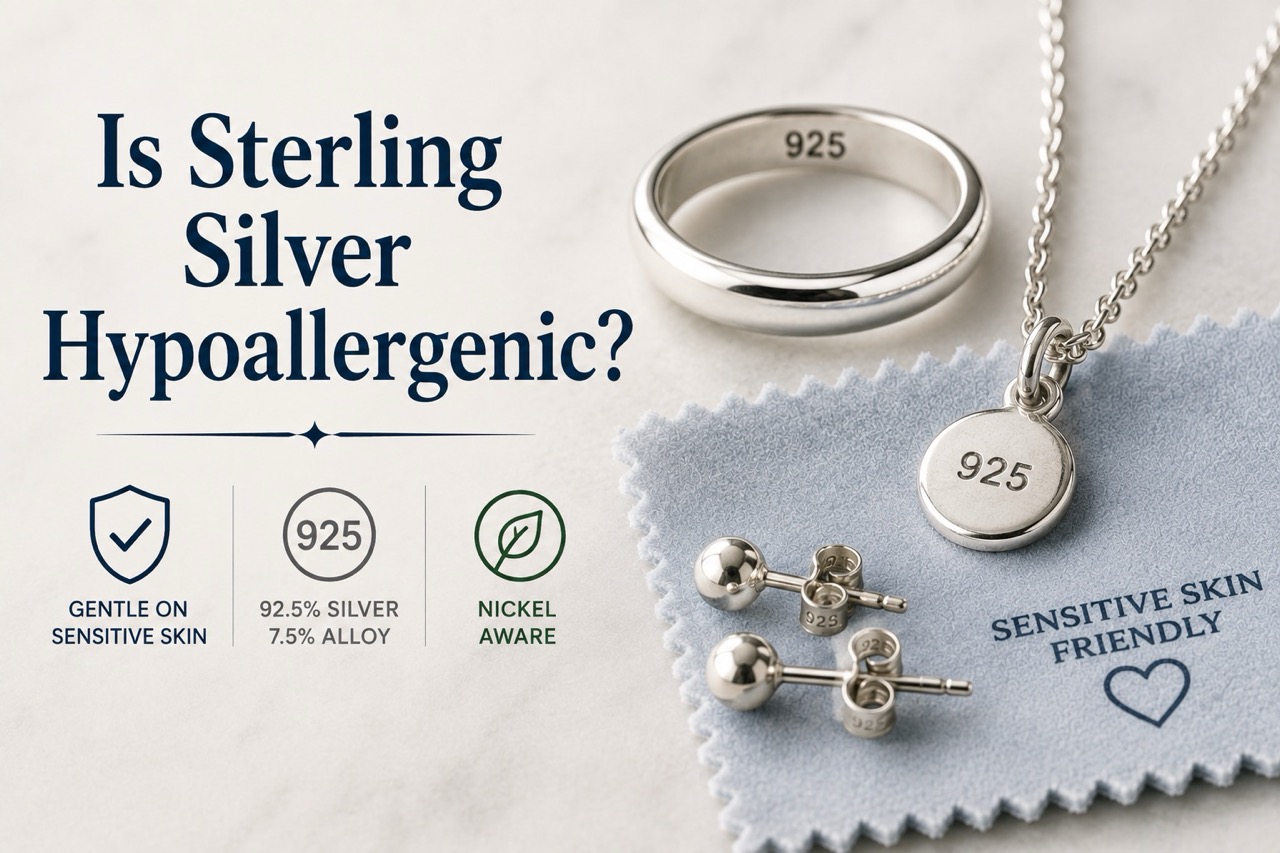
Sterling silver is generally a good jewelry choice for sensitive skin, and dermatology guidance includes sterling among options for people trying to avoid nickel. However, “hypoallergenic” does not mean allergy-proof, and a 925 stamp alone cannot tell you the composition of every part of a finished piece.
Genuine sterling contains 92.5% silver and 7.5% other metals, commonly copper. If you have a known nickel allergy, pay attention to the complete piece—including posts, backs, clasps, solder, and coatings—rather than relying only on the 925 mark.
Here’s what sterling’s composition means for sensitive skin and what to check before buying or wearing it.
What Does Hypoallergenic Mean for Jewelry?
Hypoallergenic jewelry is intended to reduce the likelihood of an allergic reaction, but no material can guarantee that every person will tolerate it.
For sensitive skin, the actual metals touching you matter more than a broad marketing label.
Nickel deserves particular attention. It is one of the most common causes of allergic contact dermatitis, an immune reaction that develops after skin contacts an allergen.
Symptoms can include an itchy rash, changes in skin color, dry or cracked skin, and irritation. The reaction may not appear immediately; allergic contact dermatitis can take hours or days to develop.
Jewelry is a common source of nickel exposure, particularly earrings and earring backs, although rings, necklaces, bracelets, and watches can also cause problems when they contain an allergenic metal.
Simple discoloration is different from an allergy. A green or dark mark on your skin without itching or inflammation does not by itself establish allergic contact dermatitis.
Is 925 Sterling Silver Good for Sensitive Skin?
Genuine sterling silver is considered a suitable jewelry option for many people with nickel sensitivity.
Both the American Academy of Dermatology and Mayo Clinic include sterling silver among jewelry materials people with nickel allergy can consider.
Sterling contains 92.5% silver. The remaining 7.5% consists of other alloying metals, with copper commonly used in conventional sterling.
That composition gives sterling more hardness than fine silver, making it practical for rings, necklaces, bracelets, and other jewelry.
The important limitation is that 925 describes silver fineness rather than every material in the finished item.
An earring, for example, may contain a sterling decorative section plus a separate post, back, solder joint, or coating. If those components have a different composition, the 925 mark on the sterling portion does not tell you what they contain.
Read our guide to what 925 sterling silver is for more about the alloy.
Does 925 Sterling Silver Contain Nickel?
A 925 stamp does not tell you whether the remaining 7.5% contains nickel.
The mark tells you that the item claims a silver fineness of 925 parts per 1,000. It does not provide a complete ingredient list for the other 75 parts.
Traditional sterling commonly uses copper as its main alloying metal. That is one reason sterling is often recommended as a jewelry option for people avoiding nickel.
However, if you have a diagnosed nickel allergy, do not treat the number 925 as a specific nickel-free certification. Check the manufacturer’s material specifications for the particular piece.
You should also consider components that may not be sterling at all:
- Earring posts and backs
- Clasps
- Soldered joints
- Chains and findings
- Plating or coatings
- Decorative metal components
For an unknown piece, our sterling silver hallmarks guide can help you interpret its silver markings.
Why Can Sterling Silver Irritate Your Skin?
Skin irritation while wearing sterling does not automatically mean you are allergic to silver.
Nickel or another allergenic metal in a jewelry component is one possible explanation. Jewelry can also trap soap and moisture against the skin, particularly beneath rings.
Friction can contribute to irritation as well. A tight ring or earring can irritate skin mechanically without causing an allergic reaction.
The symptoms provide useful clues. Nickel allergy commonly produces an itchy rash where the metal contacts the skin, although reactions can sometimes extend beyond the original contact area.
If one piece consistently produces itching or a rash, stop wearing it. A dermatologist can evaluate suspected allergic contact dermatitis, and patch testing can help identify whether nickel or another substance is responsible.
Do not use a green mark as a self-test for metal allergy. Skin staining and allergic contact dermatitis are different effects.
Is Sterling Silver Good for Sensitive Ears?
Sterling silver can be a good option for established ear piercings, provided the components touching your skin are suitable for you.
Check more than the decorative part of the earring. Posts, hooks, backs, and solder can have different compositions.
For someone with a known nickel allergy, look for documented material information rather than relying solely on the word “hypoallergenic.”
New piercings require additional care. Initial jewelry needs suitable material quality, surface finish, dimensions, and construction for healing tissue. A 925 mark by itself does not establish that a particular earring is appropriate for a fresh piercing.
Follow the material and aftercare recommendations of a qualified piercing professional for new piercings.
What Jewelry Metals Are Good for Nickel Allergies?
Choose jewelry based on documented composition if you know you have a nickel allergy.
The American Academy of Dermatology and Mayo Clinic identify several options for people avoiding nickel, including sterling silver, titanium, certain grades of stainless steel, platinum, and higher-karat yellow gold.
The exact product still matters. Jewelry can contain multiple metals, and clasps, backs, solder, and decorative components may differ from the main body.
Titanium is another common choice for people concerned about nickel exposure. For piercing jewelry in particular, verify the specific material grade rather than relying only on the word “titanium.”
If you have persistent reactions to jewelry, identifying your actual allergen is more useful than switching among products labeled hypoallergenic. A dermatologist can use patch testing to investigate allergic contact dermatitis.
Frequently Asked Questions
Is 925 sterling silver hypoallergenic?
Sterling silver is generally considered a suitable option for sensitive skin, but 925 is not a guarantee that every person will avoid a reaction.
The mark indicates 92.5% silver. If you have a known metal allergy, check the composition of the complete piece, particularly posts, backs, clasps, solder, and coatings.
Can you be allergic to sterling silver?
A person can develop a reaction while wearing sterling jewelry, but that does not automatically mean silver caused it.
Nickel and other metals can cause allergic contact dermatitis, while soap, moisture, or friction trapped beneath jewelry can also irritate skin. Patch testing can help identify a suspected contact allergen.
Is sterling silver or stainless steel better for sensitive skin?
Both can be suitable depending on the specific product and your allergy.
Dermatology guidance includes sterling silver and surgical-grade stainless steel among options for people avoiding nickel. If you have a confirmed allergy, choose based on documented composition rather than the material name alone.
Is sterling silver safe for new piercings?
Do not choose initial piercing jewelry based only on a 925 stamp. Healing piercings have specific requirements for material quality, finish, construction, and fit.
Use jewelry recommended for initial piercings by a qualified piercing professional and verify its specific material specification.
The Bottom Line
If you’re asking is sterling silver hypoallergenic, genuine sterling is generally a good option for sensitive skin and is specifically included in dermatology guidance for people avoiding nickel. However, hypoallergenic does not mean allergy-proof, and a 925 mark only identifies the claimed silver fineness.
If you have a known nickel allergy, check the materials used throughout the finished piece rather than assuming every component is sterling. To understand what a 925 stamp can—and cannot—tell you, start with our sterling silver hallmarks guide.