A 925 stamp on a ring means the piece is marked as 92.5% silver, the fineness associated with sterling silver. In other words, the alloy contains 925 parts silver per 1,000 parts total, with the remaining 7.5% made from other metals, commonly including copper.
You will often find 925 inside the ring band, sometimes beside a maker’s mark, country-of-origin mark, or another symbol.
The stamp is useful evidence that the ring was represented as sterling silver, but it does not prove authenticity. If you find 925 inside a ring, check the other markings and the metal itself before assuming it is genuine.
Does 925 Mean a Ring Is Real Silver?
The 925 mark represents sterling silver fineness: 92.5% silver by mass.
The number breaks down like this:
- 925 parts silver
- 75 parts other metals
- 1,000 parts total
Copper commonly forms part of the remaining 7.5%. Adding alloying metals makes sterling harder than fine silver, which is 99.9% pure and comparatively soft.
You may see the same basic fineness expressed as:
925
.925
STERLING
These markings all indicate a sterling-silver claim.
The number does not tell you the ring’s age, weight, maker, or value. It only identifies the claimed silver fineness.
For a fuller explanation of the alloy, see what 925 sterling silver is.
Does a 925 Stamp Prove a Ring Is Genuine?
No. A 925 stamp is evidence of a fineness claim, not proof that the ring actually contains 92.5% silver.
Incorrect or counterfeit marks are possible, particularly on jewelry from unknown sources.
Look at several clues together:
| Check | What It Tells You |
|---|---|
925, .925, STERLING | Claims sterling fineness |
| Maker’s mark | May identify the manufacturer |
| Country mark | Indicates stated origin |
| Strong magnet attraction | Raises questions about the metal |
| Different-colored metal beneath surface | May indicate plating |
| Professional metal analysis | Provides stronger composition evidence |
A magnet test has limited value. Sterling itself should not show strong magnetic attraction, but many non-silver metals are also nonmagnetic.
A ring that does not stick to a magnet has therefore not been proven to be silver.
For a valuable or questionable ring, professional metal testing provides stronger evidence than a stamp or magnet alone.
Where Is the 925 Stamp on a Ring?
The 925 stamp commonly appears on the inside of the band.
This location keeps the mark relatively unobtrusive while providing a surface suitable for stamping.
You might find:
925
.925
STERLING
925 ITALY
or 925 alongside initials, symbols, or another number.
Do not assume every number is a purity mark. Some stamps identify manufacturers, designers, model information, or other characteristics.
If your ring has unfamiliar letters or symbols next to 925, compare them with our sterling silver hallmarks guide.
What Does 925 Italy Mean on a Ring?
A 925 Italy mark represents a claim of 92.5% silver fineness and Italian origin.
The two parts provide different information:
925 = silver fineness
Italy = stated origin
925 Italy is not a special silver grade and does not mean the ring contains more silver than another genuine 925 sterling ring.
Italian precious-metal jewelry may also carry additional identifying marks. The exact marks you encounter can depend on the item’s age and circumstances of manufacture and sale.
The words 925 Italy alone still do not authenticate a ring. Evaluate the complete set of marks rather than relying on one stamp.
Why Is My 925 Ring Turning Black or Green?
A genuine 925 ring can develop black tarnish or leave greenish staining without being fake.
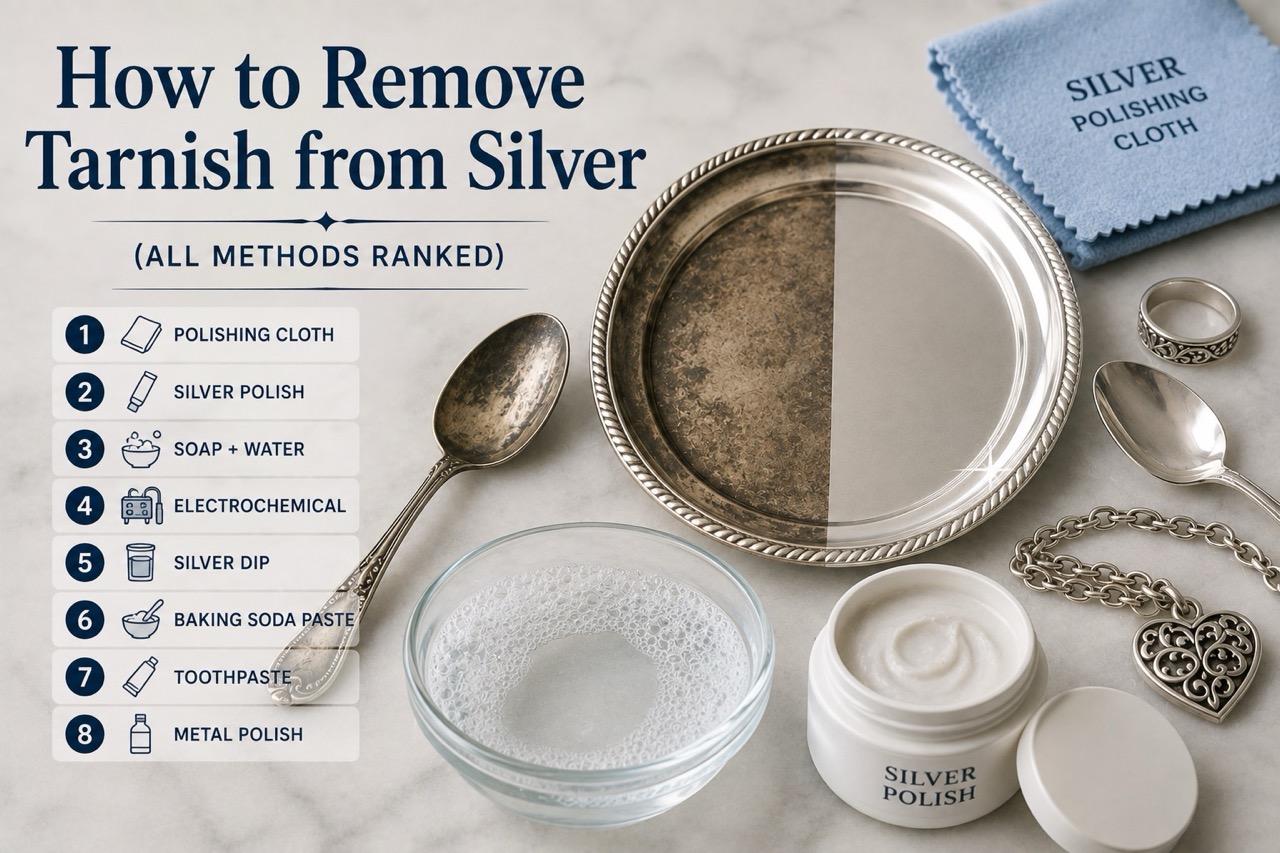
Black or gray discoloration commonly comes from tarnish. Silver reacts with sulfur-containing substances and forms silver sulfide on its surface.
Sterling also commonly contains copper. Under some conditions, reactions involving copper and substances on your skin or in the environment can contribute to green discoloration.
Green skin therefore does not automatically mean a 925 ring is fake.
A different situation occurs when a silver-colored surface physically wears away and exposes a distinctly yellow, reddish, or copper-colored layer underneath. That can indicate a plated object rather than solid sterling.
Use discoloration as a clue, not an authenticity test.
Is a 925 Ring Worth Anything?
A genuine 925 ring has intrinsic silver value, but its total value may be higher than its metal content.
If the entire 10-gram weight represents sterling alloy, for example:
10 g × 0.925 = 9.25 g of silver
Converting that amount to troy ounces:
9.25 ÷ 31.1035 ≈ 0.2974 troy oz
The theoretical sterling melt-value formula is:
weight in grams × 0.925 ÷ 31.1035 × silver spot price
[LIVE_PRICE_EMBED]
If the ring contains gemstones or substantial non-silver components, do not include their weight when calculating silver content.
Actual resale value can also differ from theoretical melt value. A dealer or refiner may pay less because of processing costs and margins, while a desirable maker, design, gemstone, or antique ring can be worth more than its silver alone.
Use our sterling silver calculator to estimate metal value from silver weight.
Frequently Asked Questions
What does 925 mean inside a ring?
It means the ring is marked as having a silver fineness of 925 parts per 1,000, or 92.5% silver.
That is the standard fineness associated with sterling silver.
Is a ring stamped 925 always real?
No. A 925 stamp can be incorrect or counterfeit.
Treat the mark as evidence rather than proof. Additional hallmarks, construction, provenance, and professional metal testing can provide more information.
What does 925 mean on a gold-colored ring?
A gold-colored ring marked 925 may have sterling silver underneath a gold-colored coating.
The 925 refers to the claimed silver fineness of the base metal. It does not tell you the purity or thickness of the gold-colored surface.
Can a fake ring have a 925 stamp?
Yes. A ring made from another metal can carry a false 925 stamp.
This is why a stamp alone cannot authenticate sterling silver.
The Bottom Line
If you’re wondering what does 925 mean on a ring, it indicates a claimed silver fineness of 92.5%, which corresponds to sterling silver. The mark does not establish the ring’s authenticity, maker, age, or value by itself.
Check any additional hallmarks and inspect the construction before drawing conclusions. For the broader explanation of 925 purity and sterling composition, read our guide to what 925 sterling silver is.