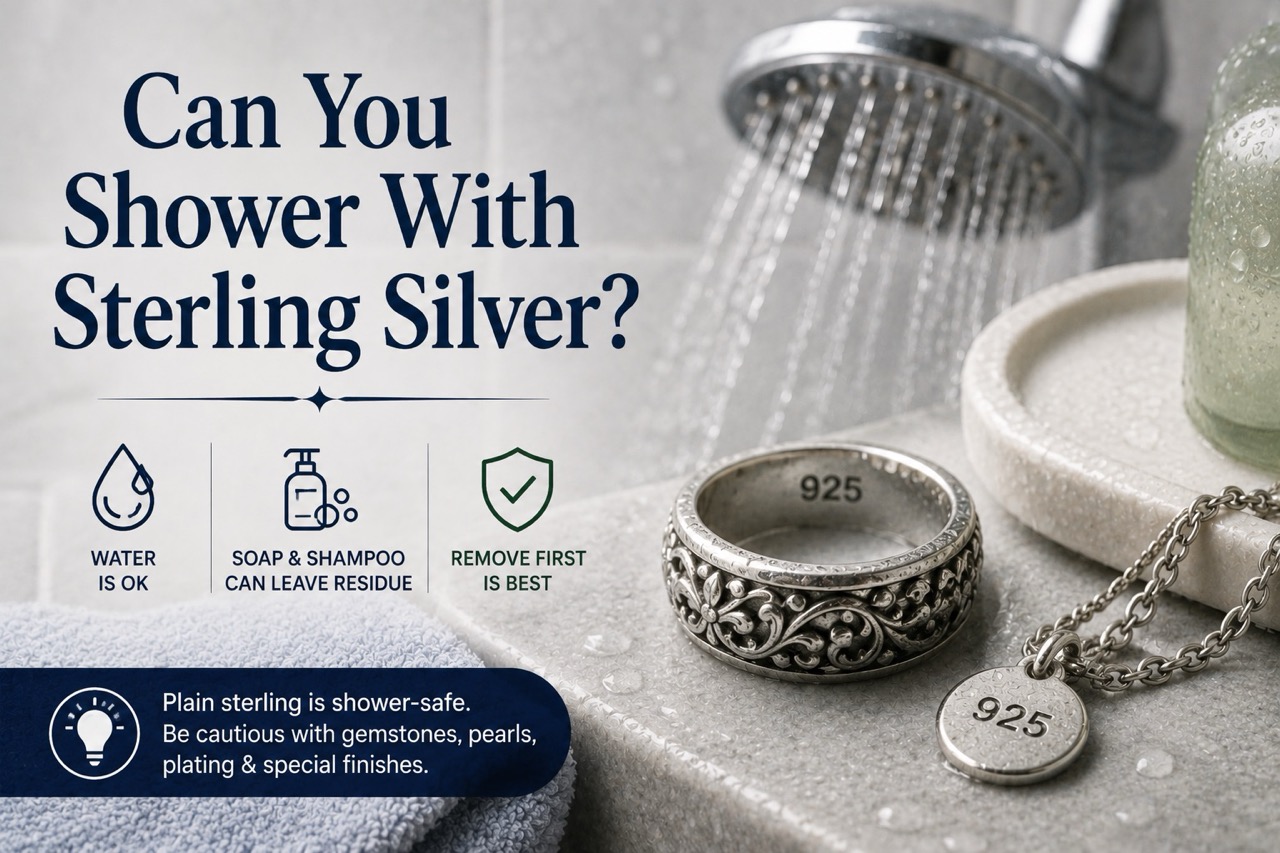
Yes, you can shower with plain sterling silver, and an occasional shower is unlikely to damage genuine 925 jewelry.However, removing your jewelry first is the better routine because soaps, shampoos, conditioners, and other products can leave residue or expose the metal to unnecessary chemicals.
Sterling contains 92.5% silver and 7.5% other metals, commonly copper. Ordinary water is not the primary cause of its characteristic dark tarnish. Silver tarnishes mainly through reactions with sulfur-containing substances, while humidity can accelerate those reactions when tarnishing pollutants are present.
The answer changes if your jewelry contains gemstones, pearls, adhesives, plating, or special finishes.
What Happens If You Shower With Sterling Silver?
Plain sterling silver will not normally be ruined by occasional contact with ordinary shower water.
Water does not cause sterling to develop conventional iron rust. The more practical concern is everything else that contacts your jewelry during a shower.
Soap, shampoo, conditioner, and skincare products can leave material behind on rings, chains, earrings, and pendants. Residue can collect around clasps, inside chain links, behind stones, and in engraved details.
Some personal-care products also contain chemicals that may not be suitable for every metal, gemstone, or finish. Product formulations vary, so there is little benefit in exposing valuable jewelry to them repeatedly.
If you accidentally shower with a plain sterling chain or ring, you generally do not need to do anything aggressive. Remove any obvious residue when appropriate and dry the jewelry thoroughly.
Does Water Tarnish Sterling Silver?
Clean water is not the main cause of sterling silver tarnish.
Silver’s characteristic dark tarnish forms primarily when silver reacts with sulfur-containing gases such as hydrogen sulfide. The reaction produces silver sulfide, which eventually creates the familiar black surface.
Moisture still affects the process. Research summarized by the Canadian Conservation Institute shows that silver tarnishes faster as relative humidity rises when hydrogen sulfide is present.
That distinction matters. Getting a sterling ring wet once is different from storing it damp in an environment containing tarnishing pollutants.
Keep your jewelry dry during storage, but do not assume that every drop of clean water will immediately tarnish 925 silver.
For more about the alloy, see our guide to what 925 sterling silver is.
Should You Take Sterling Silver Off Before Showering?
Yes. Taking sterling jewelry off before showering is a simple way to reduce residue, chemical exposure, and physical wear.
Removing jewelry keeps shampoo, conditioner, soap, and other products from accumulating in detailed areas. It also makes drying the jewelry unnecessary after every shower.
There are practical reasons too. A fine chain can snag while you wash your hair, while rings and earrings become easier to lose when your hands and skin are slippery.
The recommendation becomes stronger for jewelry made from several materials. Plain sterling may tolerate conditions that are inappropriate for a gemstone, adhesive, coating, or other component.
If removing a plain sterling piece is inconvenient on one occasion, there is no reason to assume the shower has ruined it. Dry it afterward and check for product residue.
Can You Wear Sterling Silver in a Pool or Hot Tub?
Take sterling jewelry off before entering a chlorinated pool or hot tub.
A swimming pool is not equivalent to an ordinary shower. GIA recommends removing fine jewelry before entering chlorinated pools because chemical exposure can damage or discolor precious metals and harm some gemstones.
Hot tubs add elevated temperatures to chemically treated water. Gemstones can also respond differently to heat and chemicals depending on their composition and treatments.
Removing jewelry before swimming has another advantage: you cannot lose a ring, chain, or earring in the water if you leave it somewhere secure.
Salt water also exposes jewelry to a different environment from ordinary tap water. Rather than trying to predict how every alloy, stone, solder joint, and finish will respond, remove valuable jewelry before entering the ocean.
Can You Shower With Sterling Silver and Gemstones?
Do not assume gemstone-set sterling is shower-safe simply because the silver itself can get wet.
Different gems respond differently to chemicals, heat, and cleaning methods. Treatments applied to gemstones can also change their care requirements.
Pearls provide a useful example. GIA says pearls can receive occasional cleaning with warm, soapy water, but they can be damaged by chemicals and should never go into ultrasonic or steam cleaners.
Other delicate or porous gems can also be affected by cosmetics and chemicals. Soap residue may accumulate around settings even when it does not permanently damage the stone.
If you do not know what a gemstone is or whether it has been treated, taking the jewelry off before showering is the safer routine.
How Should You Care for Sterling Silver After It Gets Wet?
Dry sterling thoroughly and remove visible residue before storing it.
For plain sterling that can safely get wet, mild soap and water can be used for routine cleaning when necessary. Rinse away cleaning residue and dry the piece with a soft cloth.
Pay attention to chain links, clasps, recessed decoration, and hollow areas where water can remain.
If tarnish develops, use a cleaning method appropriate for silver rather than scrubbing with rough household abrasives. Silver-polishing cloths can remove light tarnish, but polishing should not become a daily habit.
Polishing removes material from the surface. Over many cleaning cycles, that loss can reduce engraving and other fine decorative details.
If you are unsure whether your jewelry is solid sterling, plated, or made from another material, check its markings with our sterling silver hallmarks guide before using stronger cleaning methods.
Frequently Asked Questions
Can you wear 925 sterling silver in the shower?
Yes. Occasional contact with ordinary shower water is unlikely to ruin plain 925 sterling.
Taking it off first is still the better routine because it reduces contact with soaps, shampoos, conditioners, and other products and eliminates the need to dry the piece afterward.
Does sterling silver rust in the shower?
No. Sterling silver does not form conventional iron rust because it is not an iron-based alloy.
It can tarnish and undergo other surface reactions. Black discoloration on genuine sterling is usually associated with sulfide tarnish rather than rust.
Can you wear sterling silver every day?
Yes. Sterling is an alloy containing 92.5% silver and is widely used for wearable jewelry.
Daily wear still exposes jewelry to skin oils, contaminants, cosmetics, and chemicals. Regular gentle care and appropriate storage can help maintain its appearance.
What should you do if you accidentally shower with sterling silver?
For plain sterling, dry the piece thoroughly and remove any visible soap or product residue. An accidental shower does not call for aggressive polishing or chemical cleaning.
Take more care with jewelry containing gemstones, pearls, adhesives, coatings, or other materials because those components may have different care requirements.
The Bottom Line
If you’re asking can you shower with sterling silver, the answer is yes: an occasional shower is unlikely to ruin plain 925 jewelry. Removing it first is still a better habit because it limits residue, chemical exposure, snagging, and loss.
Be more cautious around chlorinated pools, hot tubs, gemstones, pearls, adhesives, and special finishes. If you are unsure whether a piece is solid sterling or plated, check its markings with our sterling silver hallmarks guide before deciding how to care for it.