Pure Silver vs. Sterling Silver: Which Should You Choose?
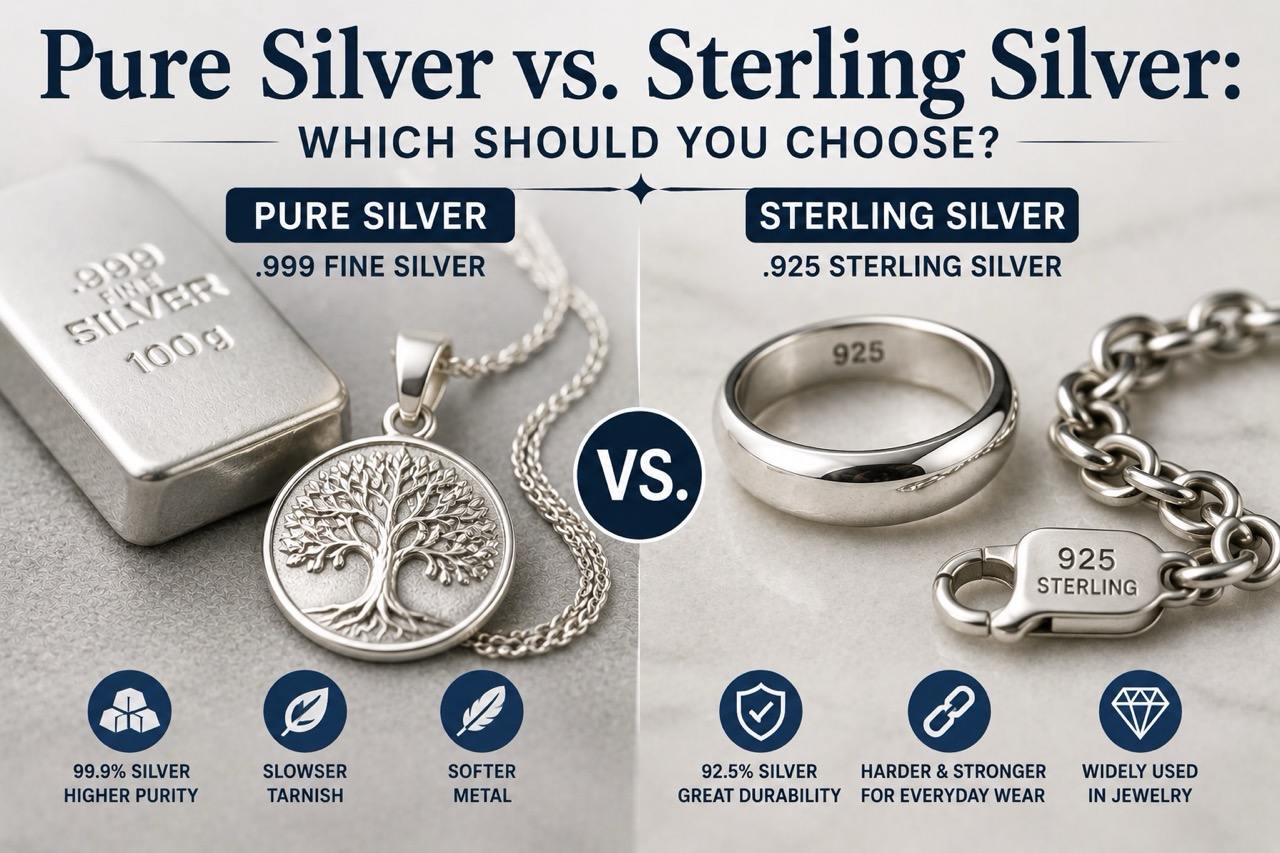
Pure Silver vs. Sterling Silver: Which Should You Choose?

In the pure silver vs sterling silver comparison, sterling is usually the better choice for everyday jewelry because it is harder, while pure or fine silver offers higher silver content. Fine silver is commonly .999, meaning 99.9% silver, while sterling contains 92.5% silver and is commonly marked 925. The remaining 7.5% in sterling consists of other metals, … Read more
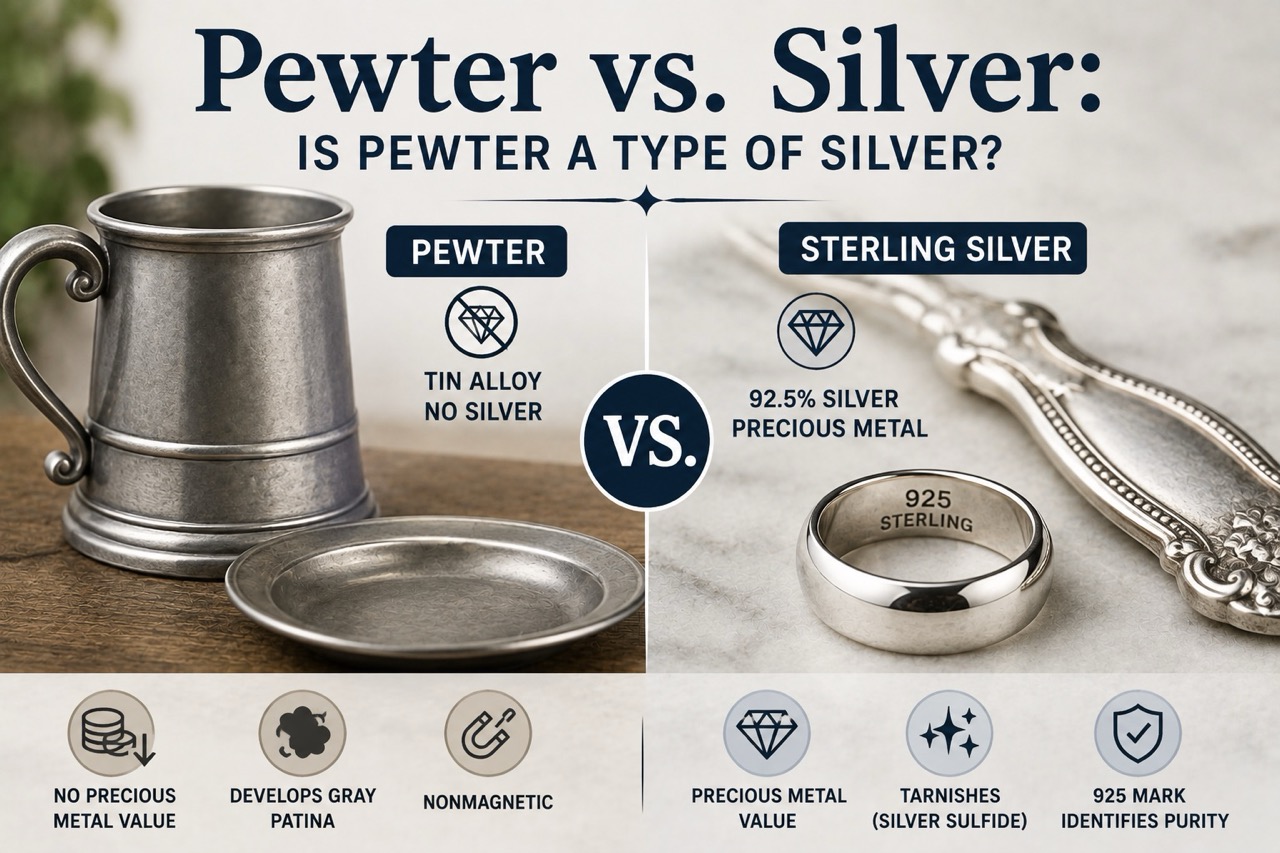
Pewter vs. Silver: Is Pewter a Type of Silver?

Pewter vs. Silver: Is Pewter a Type of Silver?

Pewter is not a type of silver. Modern pewter is primarily a tin-based alloy, while sterling silver contains 92.5% actual silver. CCI describes modern pewter as mainly tin with antimony and copper, while FTC guidance defines sterling as 92.5% pure silver.  The two metals can look similar because both have a silvery-gray appearance. Their composition, precious-metal … Read more

Silver Plated vs. Sterling Silver: How to Tell the Difference

Silver Plated vs. Sterling Silver: How to Tell the Difference

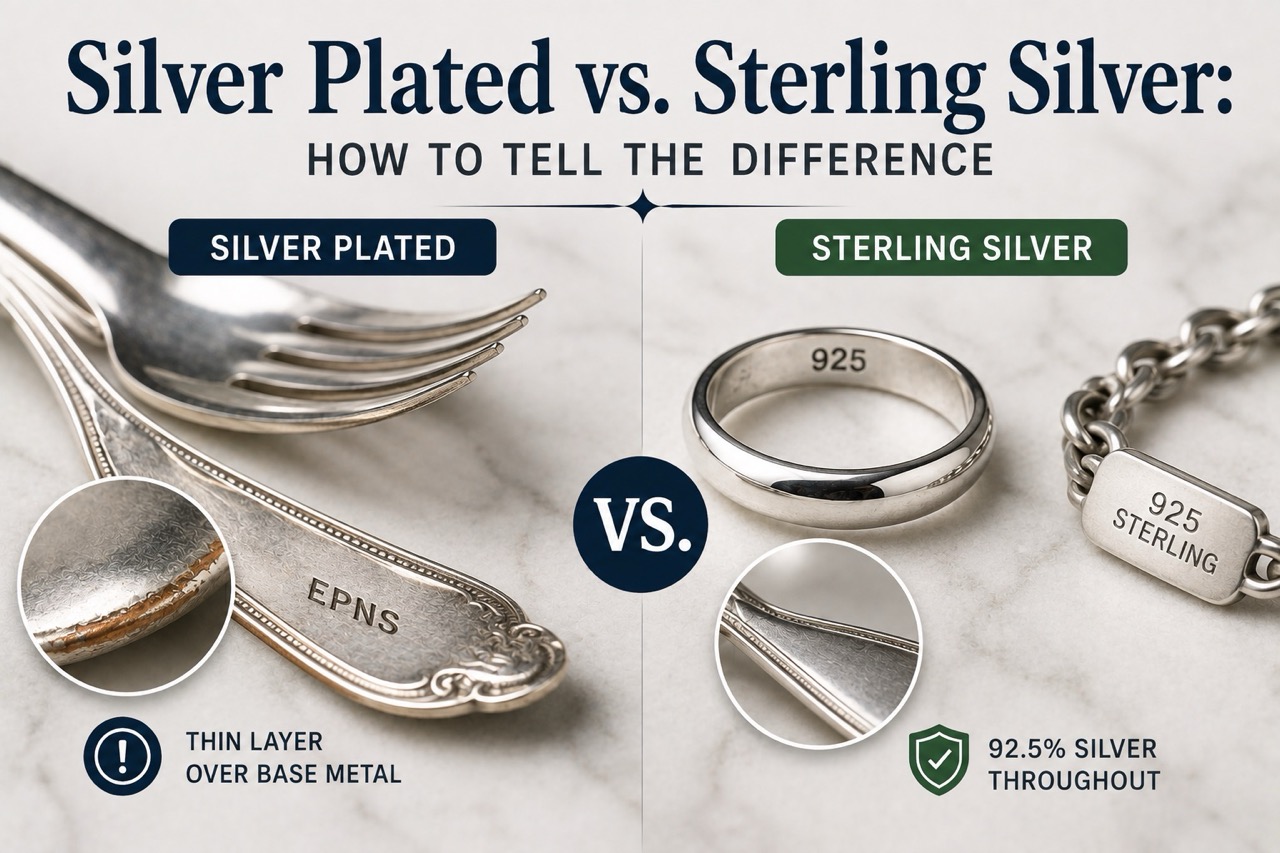
The main difference between silver plated vs sterling silver is silver content: sterling contains 92.5% silver, while silver plate has a layer of silver applied over another metal. FTC consumer guidance defines sterling as 92.5% pure silver and describes silver plate as silver applied over a base metal.  That difference affects value, wear, cleaning, and identification. … Read more

Argentium Silver vs. Sterling Silver: Which Is Better?

Argentium Silver vs. Sterling Silver: Which Is Better?

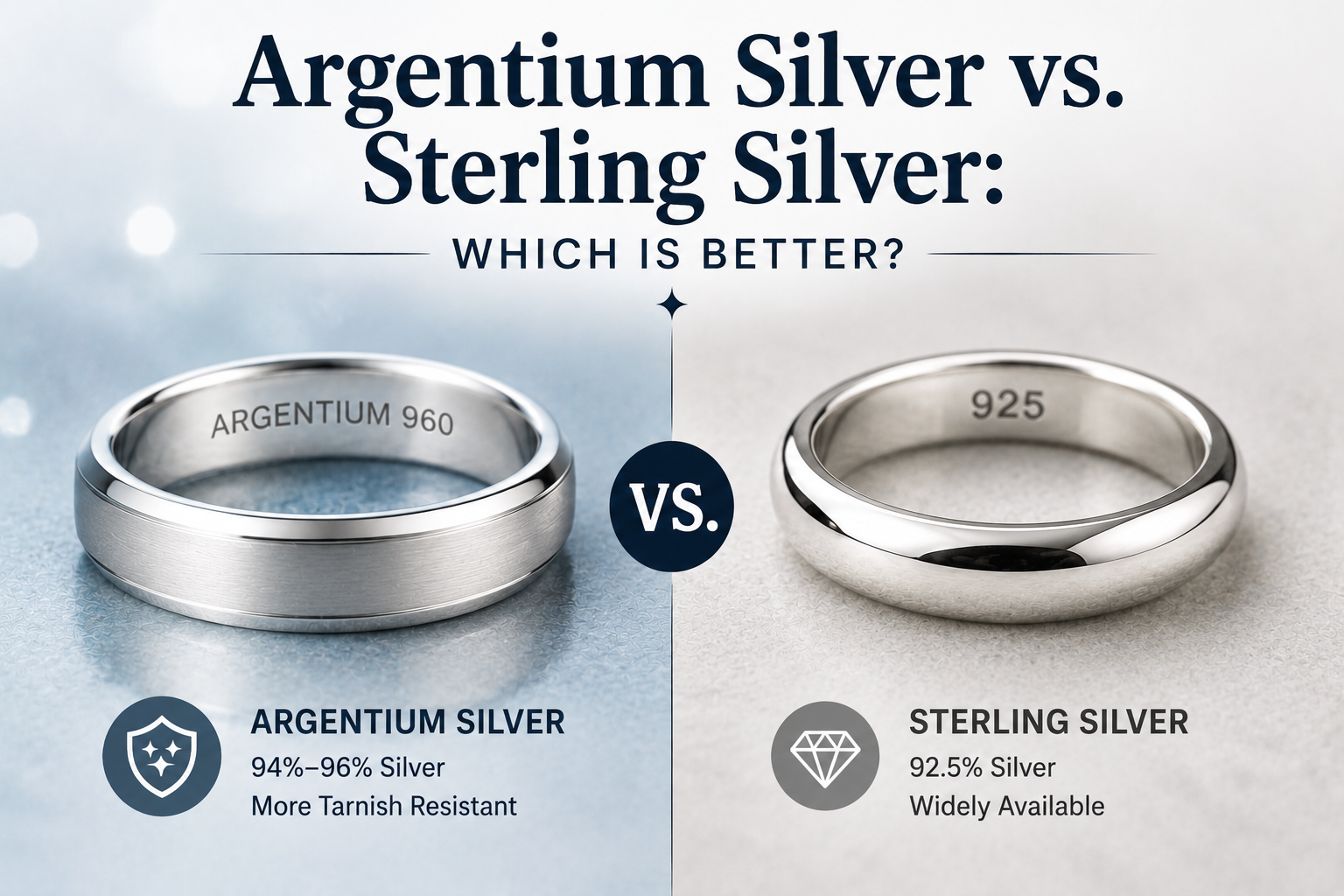
In the Argentium silver vs sterling silver comparison, Argentium offers greater tarnish resistance and higher silver purity, while traditional sterling is more widely available and recognized by its familiar 925 standard. Current Argentium alloys come in 940 and 960 grades, containing 94% and 96% silver respectively, while sterling contains at least 92.5% silver.  Argentium is especially … Read more

German Silver: What It Is (And Why It Contains No Silver)

German Silver: What It Is (And Why It Contains No Silver)

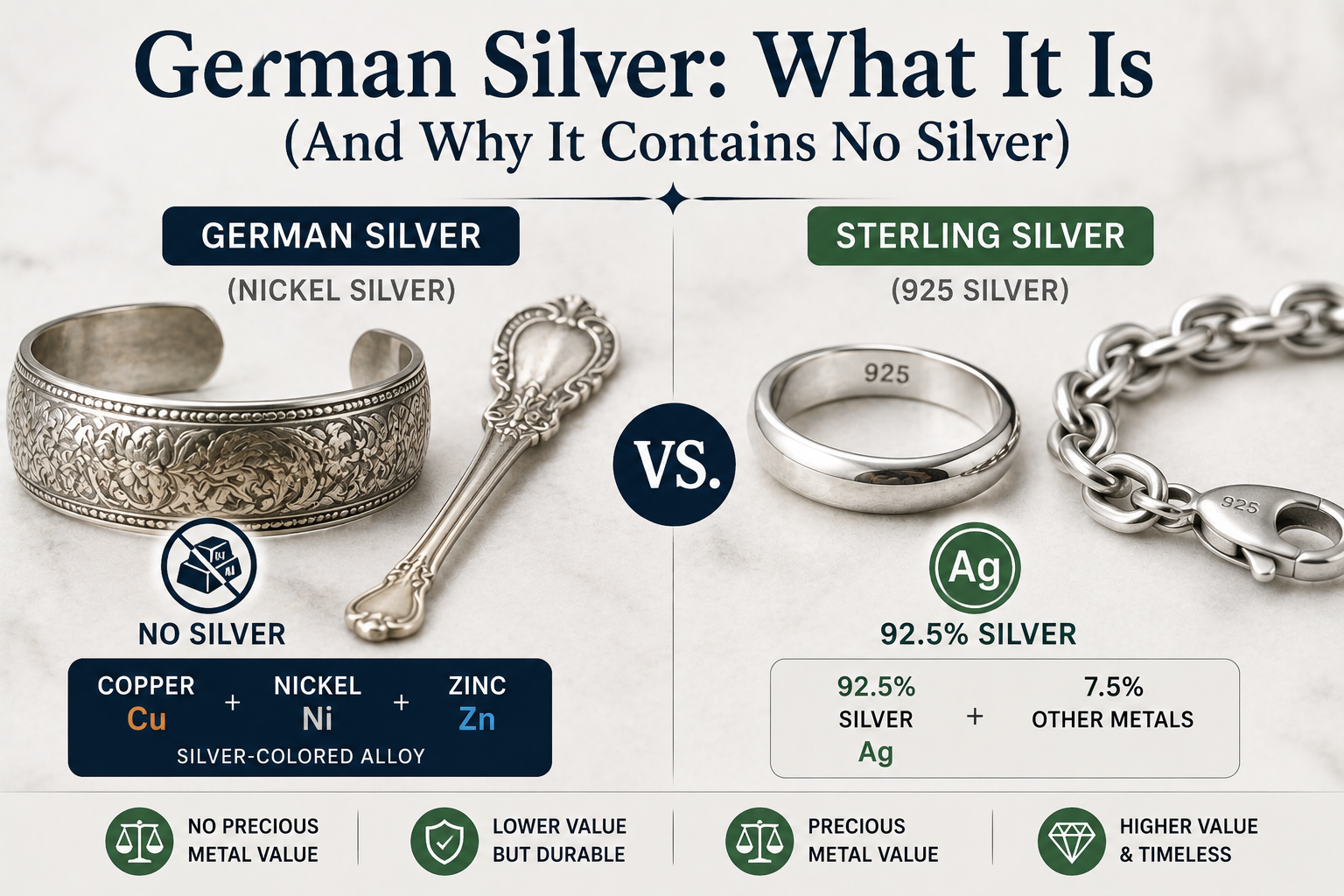
German silver contains no silver as part of its alloy. Also called nickel silver, it is made from copper, nickel, and zinc, while sterling silver contains 92.5% actual silver. That makes the German silver vs silver distinction important if you are identifying jewelry, flatware, decorative objects, or antiques. German silver can look convincingly silver-colored, but it does not have … Read more

Stainless Steel vs. Sterling Silver: Which Should You Buy?

Platinum vs. Silver: Which Makes a Better Jewelry Metal?

In the stainless steel vs sterling silver comparison, stainless steel is usually better for durability and low maintenance, while sterling silver is better if you want a precious metal with intrinsic silver value. Sterling contains 92.5% silver, while stainless steel is an iron-based alloy containing at least 10.5% chromium.  The two metals can look similar with … Read more

Platinum vs. Silver: Which Makes a Better Jewelry Metal?

Platinum vs. Silver: Which Makes a Better Jewelry Metal?

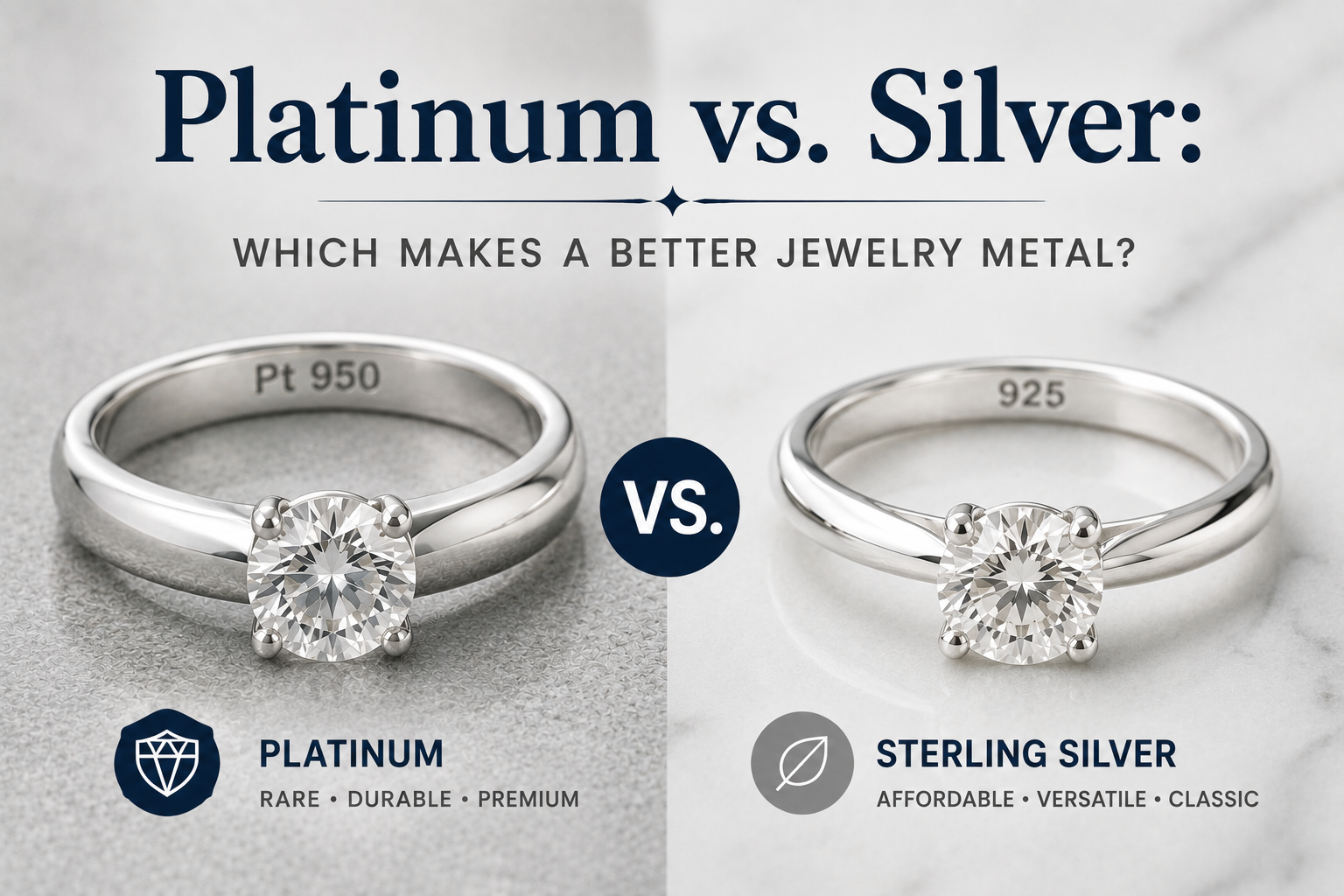
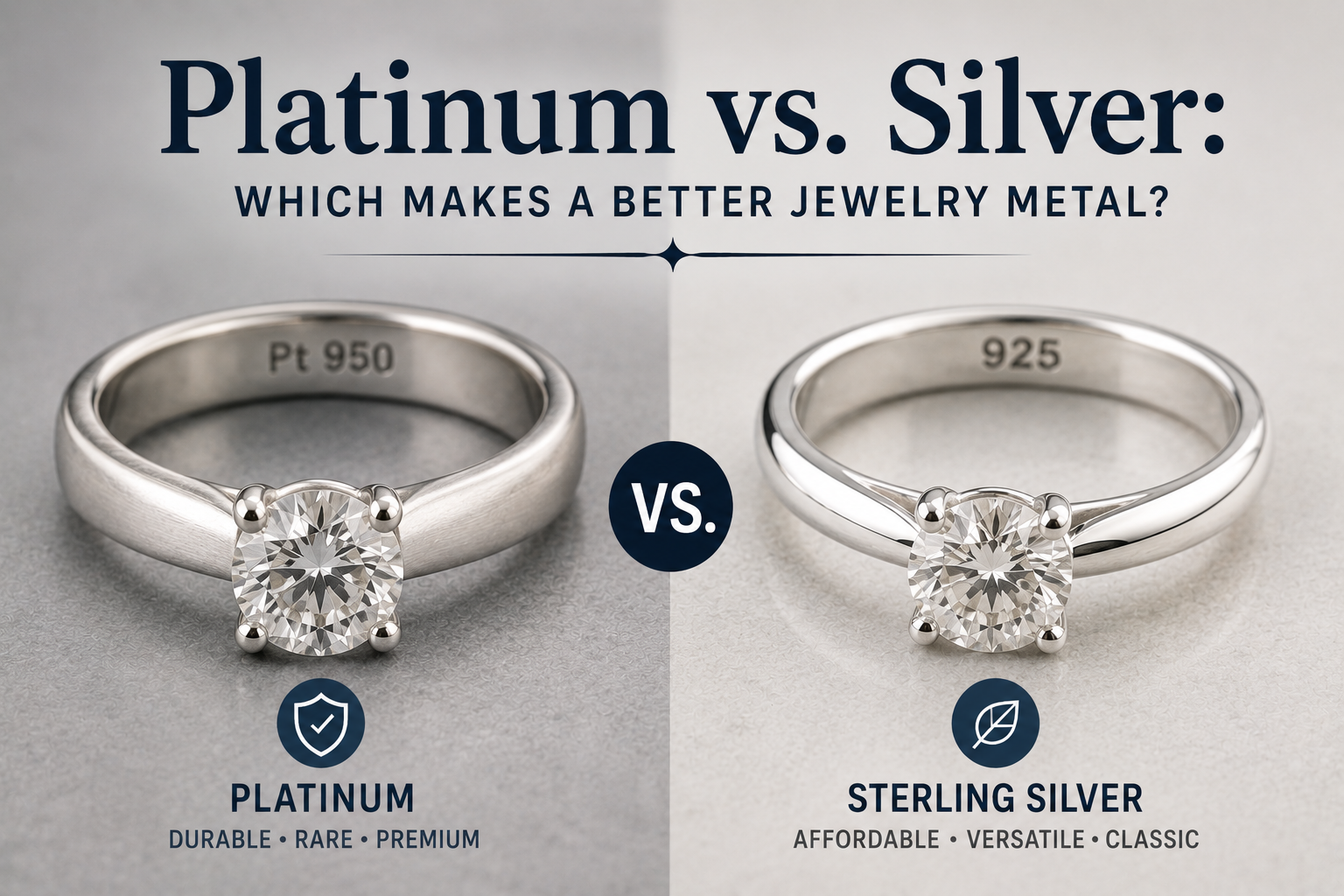
In the platinum vs silver comparison, platinum is generally better suited to high-value rings and long-term daily wear, while sterling silver is the more affordable option. Sterling contains 92.5% silver, while platinum jewelry is usually alloyed and can contain different percentages of platinum depending on how it is marked. FTC guidance says jewelry described simply as … Read more

Sterling Silver vs. Regular Silver: What’s the Difference?

Silver vs. Regular Silver: What's the Difference? de tamaƱo grande

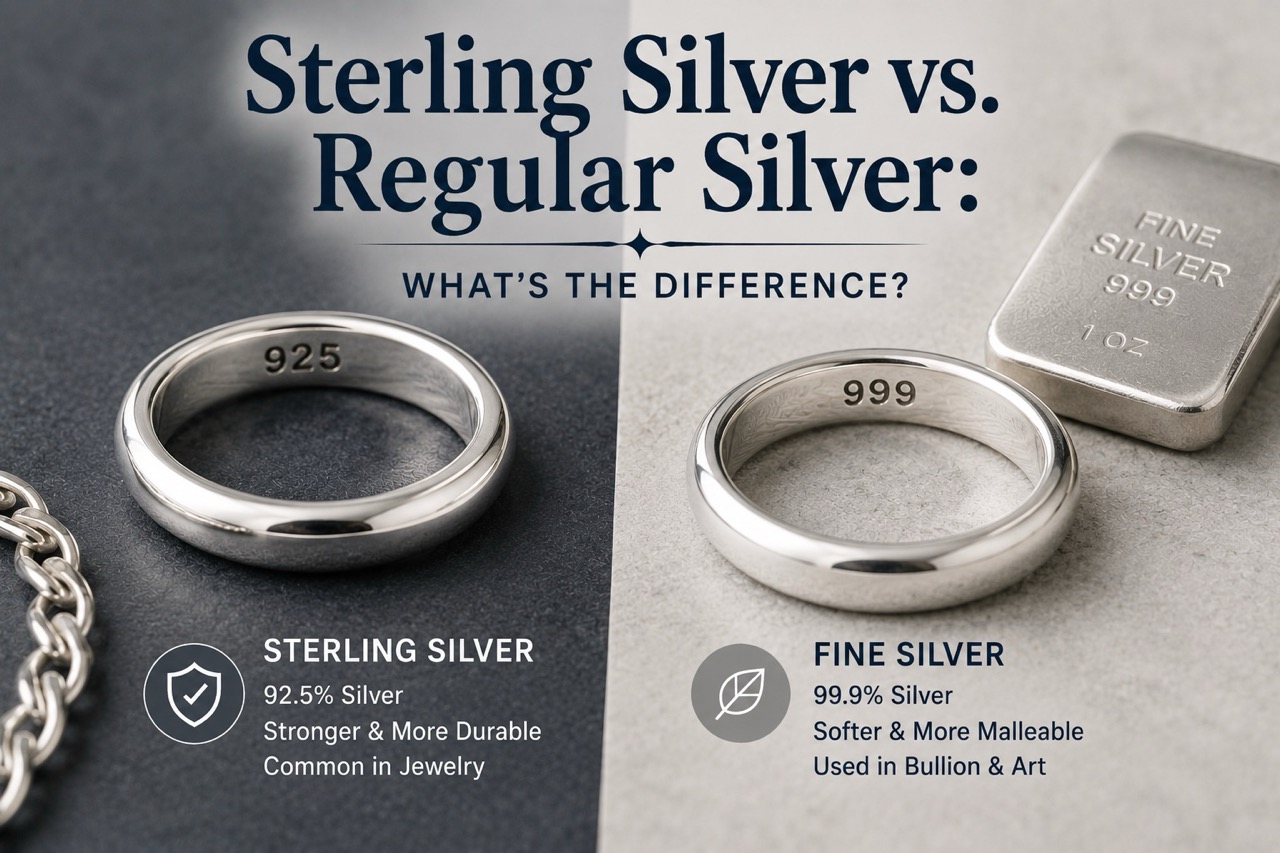
The main difference between sterling silver vs silver is purity and hardness. Sterling silver contains 92.5% silver and 7.5% other metals, commonly copper, while fine silver contains about 99.9% silver.  That difference makes sterling harder and generally more practical for rings, chains, bracelets, and other jewelry exposed to regular wear. Fine silver contains more silver by … Read more

White Gold vs. Silver: What’s the Difference?

White Gold vs. Silver: What's the Difference?

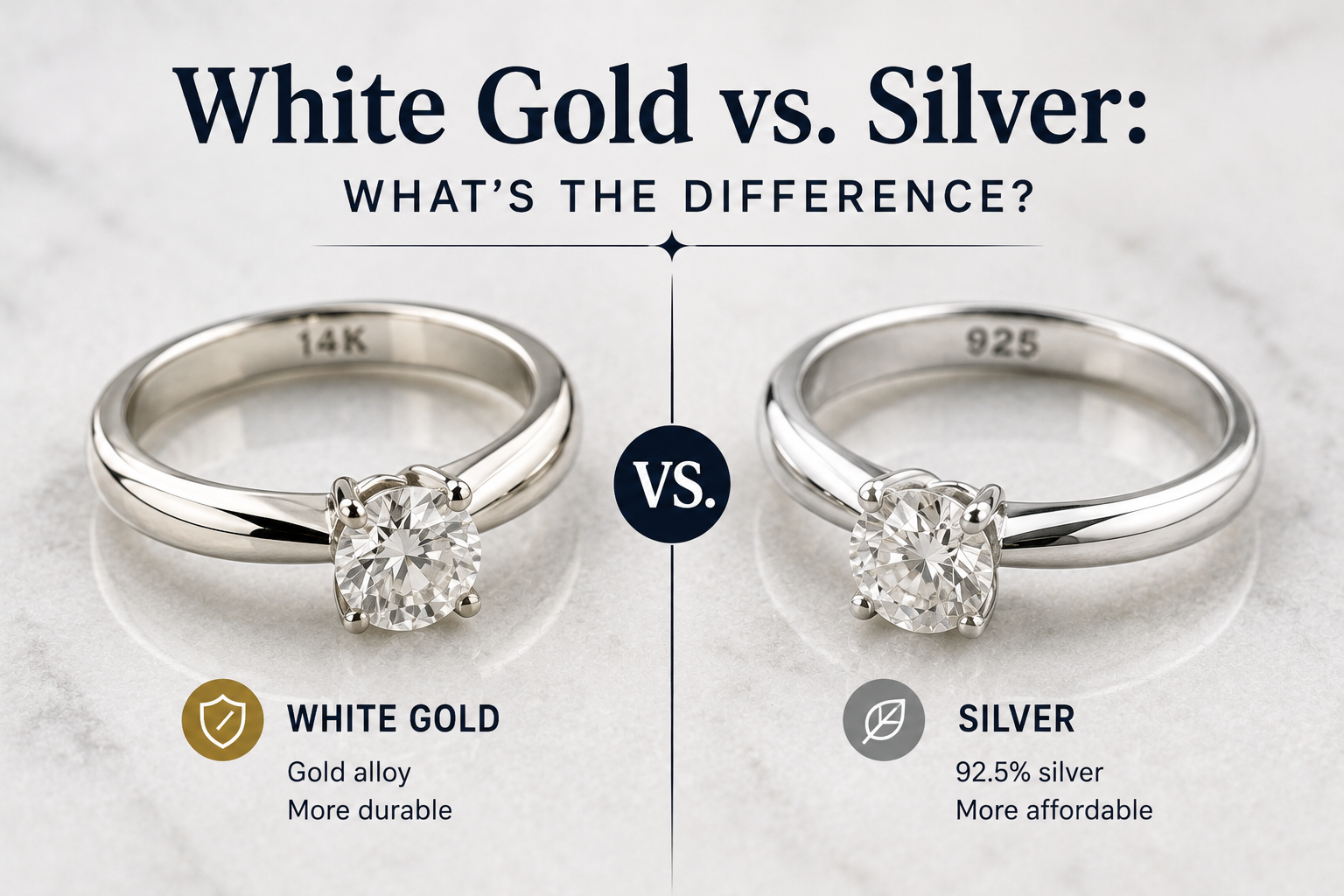
The main difference between white gold vs silver is the precious metal in the alloy: white gold is made from gold, while sterling silver contains 92.5% silver. White gold generally costs more and is better suited to rings that receive frequent wear, while sterling silver is more affordable and naturally bright white but scratches and tarnishes … Read more

925 on Gold Jewelry: What It Means (It’s Not Pure Gold)

925 on Gold Jewelry: What It Means (It's Not Pure Gold)

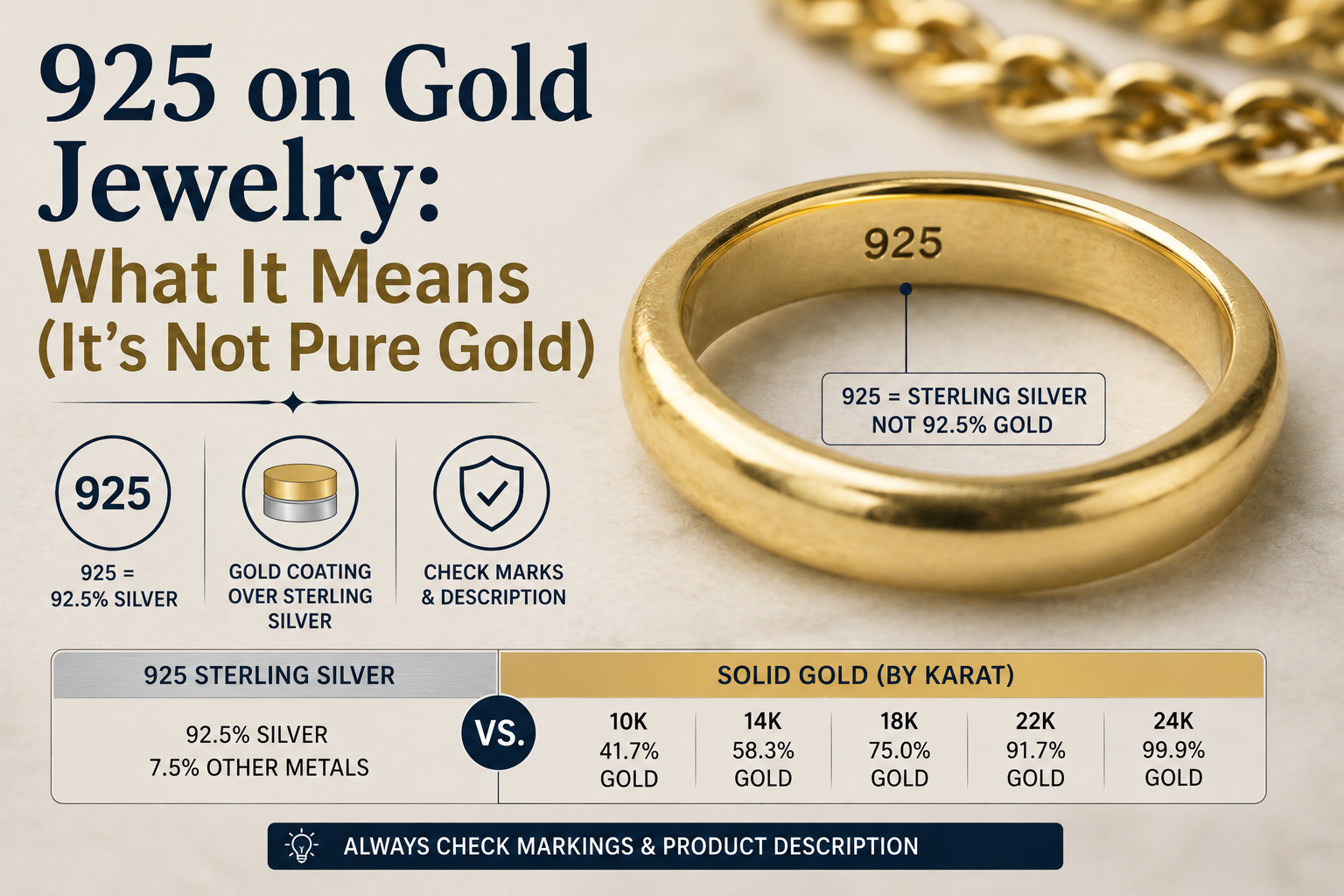
The 925 gold meaning is usually that the jewelry has a sterling-silver base, not that it contains 92.5% gold. A 925stamp means the marked metal is represented as 925 parts silver per 1,000, or 92.5% silver.  If the jewelry looks yellow or rose gold, it may have a gold coating over sterling silver. The 925 stamp itself, however, does … Read more