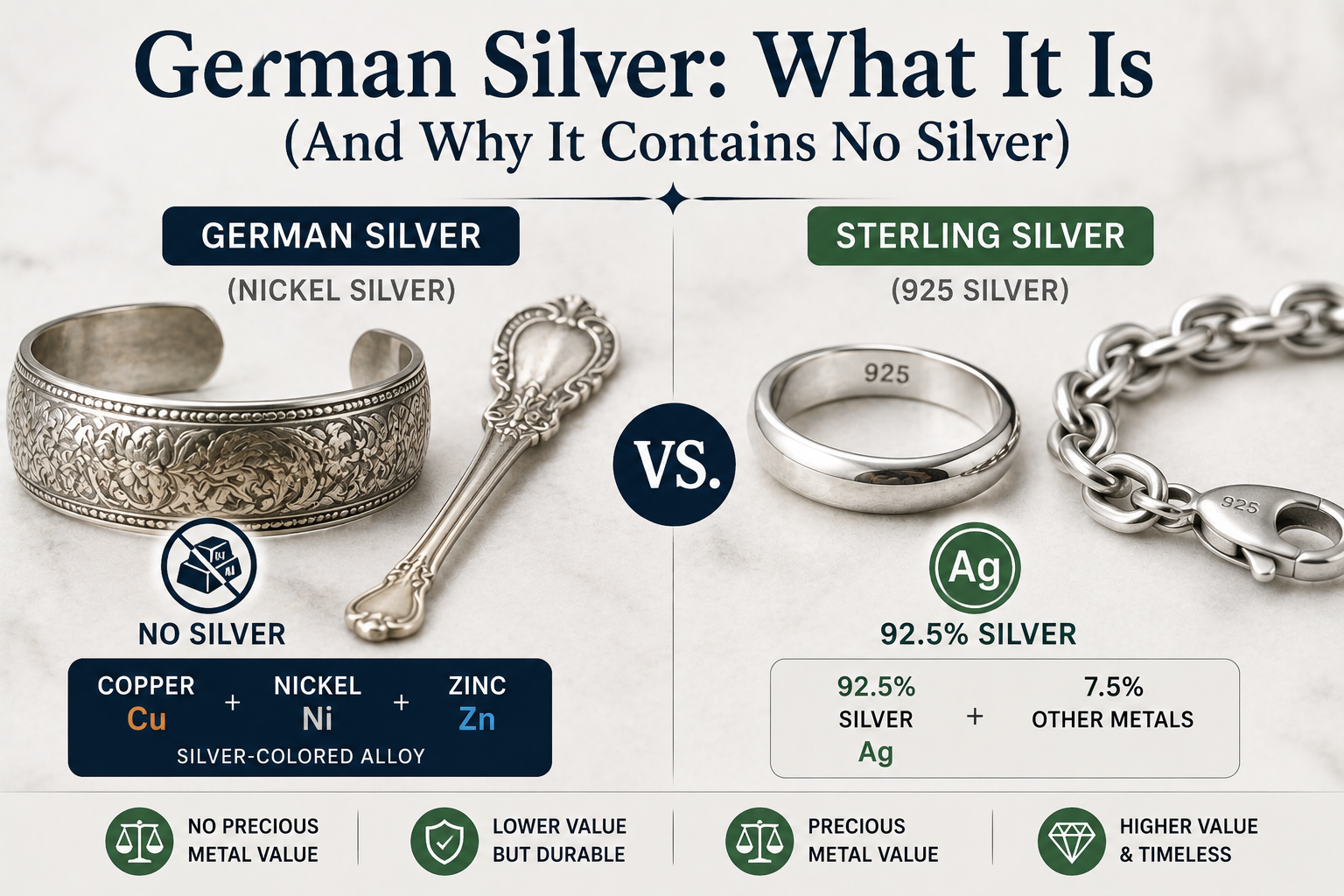
German silver contains no silver as part of its alloy. Also called nickel silver, it is made from copper, nickel, and zinc, while sterling silver contains 92.5% actual silver.
That makes the German silver vs silver distinction important if you are identifying jewelry, flatware, decorative objects, or antiques. German silver can look convincingly silver-colored, but it does not have the intrinsic silver value of sterling or fine silver.
The name describes the alloy’s silvery appearance, not its precious-metal content.
German Silver vs. Silver at a Glance
German silver is a silver-colored base-metal alloy, while sterling and fine silver contain genuine silver.
| Feature | German Silver | Sterling Silver | Fine Silver |
|---|---|---|---|
| Contains silver? | No* | Yes | Yes |
| Main composition | Copper, nickel, zinc | 92.5% silver + other metals | About 99.9% silver |
| Other name | Nickel silver | 925 silver | .999 silver |
| Precious metal? | No | Yes | Yes |
| Common silver mark | None | 925, .925, STERLING | 999, .999, FINE SILVER |
| Intrinsic silver value | None* | Based on 92.5% silver content | Based on ~99.9% silver content |
| Nickel present? | Yes | Not required by the sterling standard | Not inherent |
*A German-silver object can have genuine silver plating on its surface. In that case, the plating contains silver even though the German-silver alloy underneath does not.
What Is German Silver Made Of?
German silver is an alloy of copper, nickel, and zinc.
The exact percentages vary. There is no single German-silver recipe that applies to every object.
Nickel helps produce the alloy’s silvery-white appearance, while copper and zinc contribute to its mechanical and manufacturing properties.
You may encounter the material in jewelry, decorative objects, tableware, hardware, and musical-instrument components.
The German silver meaning therefore has nothing to do with a silver fineness standard such as 925 or 999. It is the traditional name of a base-metal alloy.
The alternative name nickel silver can be equally confusing. The material contains nickel, but the word “silver” refers to its appearance rather than actual silver content.
Does German Silver Contain Silver?
No. German silver itself contains no elemental silver as part of its standard alloy.
Compare that with sterling silver.
Sterling contains:
92.5% silver + 7.5% other metals
FTC consumer guidance confirms that products described as sterling silver contain 92.5% pure silver and may carry a 925mark.
A 100-gram sterling item therefore contains approximately:
100 × 0.925 = 92.5 grams of silver
A 100-gram unplated German-silver item contains:
0 grams of silver
There is one important exception to keep straight: German silver can be silver plated.
FTC guidance explains that silver plate consists of silver applied over a base metal. A silver-plated German-silver object therefore has genuine silver on its surface, but the underlying German-silver alloy still contains no silver.
German Silver vs. Sterling Silver: What’s the Difference?
Sterling silver is a genuine silver alloy; German silver is not.
The difference affects value, markings, care, and skin sensitivity.
| Comparison | German Silver | Sterling Silver |
|---|---|---|
| Silver purity | 0% in the underlying alloy | 92.5% |
| Primary metals | Copper, nickel, zinc | Silver plus alloying metals |
| Precious-metal value | No silver melt value | Has silver melt value |
| Typical silver hallmark | None | 925, .925, STERLING |
| Nickel | Part of the alloy | Not required |
| Silver plating possible | Yes | Possible, but not necessary to qualify as sterling |
Sterling has intrinsic value tied partly to the silver market. German silver does not have silver melt value unless an object has actual silver plating, and even then only the plating contributes silver.
You can check the live silver price when estimating the contained metal value of genuine sterling.
For more about sterling’s composition, see what 925 sterling silver is.
How Can You Tell German Silver From Real Silver?
Start with the markings because color alone cannot reliably distinguish German silver from genuine silver.
Common sterling marks include:
925
.925
STERLING
S925
FTC guidance confirms that 925 means 925 parts silver per 1,000.
Fine-silver items may instead carry markings such as 999 or .999.
German-silver objects may have wording or abbreviations referring to German silver or nickel silver, but marks vary by maker, country, and age.
Do not assume a silver-colored object is genuine silver. German silver exists specifically because its alloy produces a silver-like appearance.
A magnet is not conclusive either. Magnetic attraction or lack of attraction cannot establish silver purity on its own.
If an item is valuable and its marks are unclear, a jeweler, precious-metal dealer, or testing service can analyze its composition. X-ray fluorescence, or XRF, is one method used to identify the elements present without relying on appearance.
See our sterling silver hallmarks guide for help interpreting silver stamps.
Is German Silver Worth Anything?
Yes, but its value does not come from silver content.
An unplated German-silver object has no silver melt value because there is no silver in the alloy.
That does not make the object worthless. Value can come from:
- Maker or manufacturer
- Age
- Rarity
- Condition
- Craftsmanship
- Design
- Historical interest
- Collector demand
A desirable antique made from German silver could therefore sell for more than its base-metal value.
Silver-plated examples contain some genuine silver on the surface, but you should not value them as though their entire weight were sterling.
If you are buying primarily for precious-metal content, German silver and nickel silver should not be treated as synonyms for genuine silver.
Is German Silver Safe for Jewelry?
German silver is used for jewelry, but its nickel content makes it a poor choice for someone with a known nickel allergy.
Nickel is one of the most common causes of allergic contact dermatitis. AAD specifically identifies jewelry as a common source of nickel exposure.
That does not mean everyone who wears German silver will develop a reaction. Nickel allergy affects only some people.
If you already know you have a nickel allergy, AAD recommends avoiding objects that contain nickel and choosing appropriate alternatives.
Sterling is different because nickel is not what defines the alloy. FTC defines sterling by its 92.5% silver content, while the remaining portion can vary.
For sensitive skin, check the composition of the complete piece, including clasps, posts, backs, solder, and coatings.
Frequently Asked Questions
Is German silver real silver?
No. German silver is a copper-nickel-zinc alloy rather than a silver alloy.
Its silvery color accounts for the name.
Why is German silver called silver if it contains none?
The name refers to its silver-like appearance rather than its chemical composition.
The alternative name “nickel silver” follows the same convention.
Is German silver the same as sterling silver?
No. German silver vs sterling silver is a base-metal-versus-precious-metal comparison.
Sterling contains 92.5% silver. German silver contains no silver in its underlying alloy.
Can German silver be silver plated?
Yes. A layer of genuine silver can be applied over German silver.
That creates a silver-plated object, not solid sterling. FTC likewise distinguishes silver plate over base metal from sterling silver.
The Bottom Line
In the German silver vs silver comparison, the name is the main source of confusion. German silver is a copper-nickel-zinc alloy with no silver in the underlying metal, while sterling contains 92.5% genuine silver.
German silver can still have collectible, decorative, or antique value, and some pieces have genuine silver plating. You should not calculate an unplated German-silver object’s value using the silver spot price.
If you are trying to identify an unknown piece, check its stamps first with our sterling silver hallmarks guide.