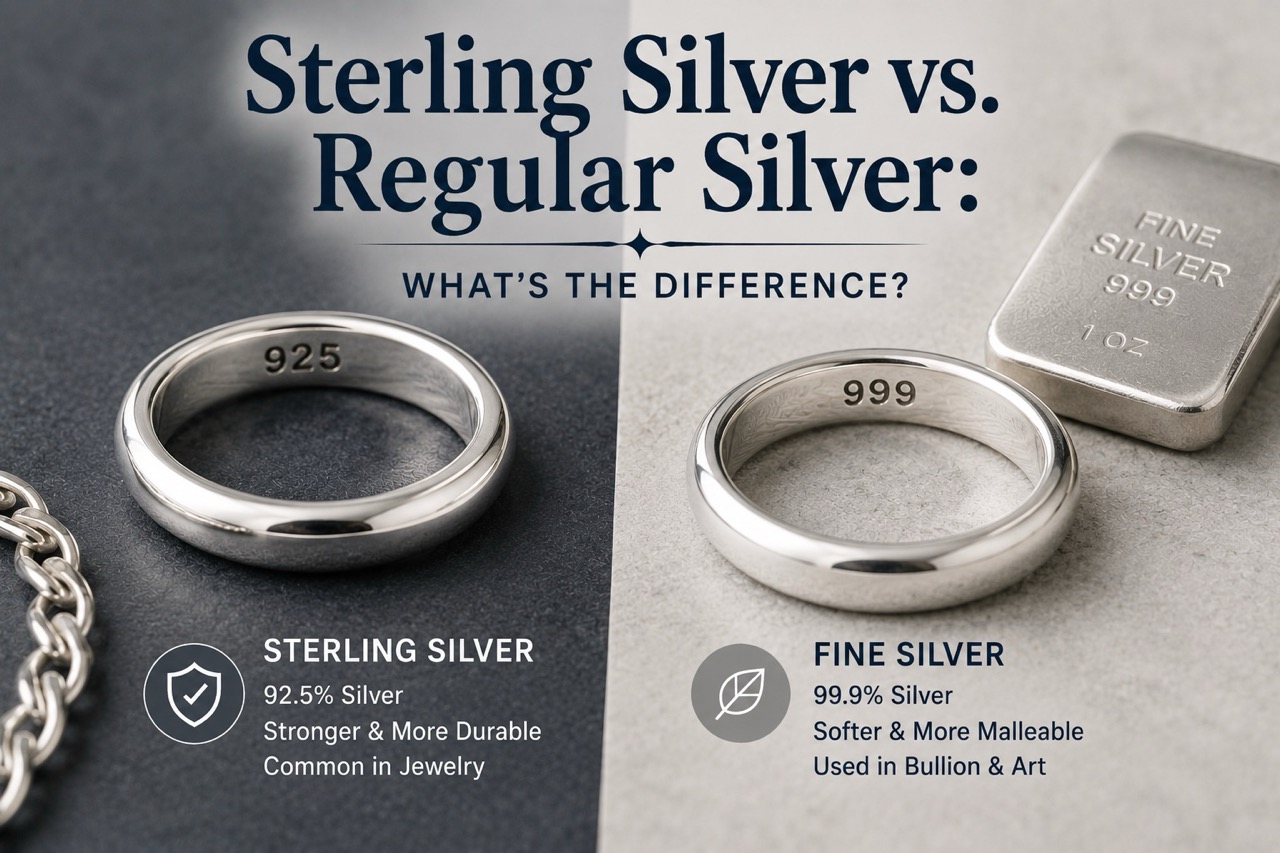
The main difference between sterling silver vs silver is purity and hardness. Sterling silver contains 92.5% silver and 7.5% other metals, commonly copper, while fine silver contains about 99.9% silver.
That difference makes sterling harder and generally more practical for rings, chains, bracelets, and other jewelry exposed to regular wear. Fine silver contains more silver by weight, but it is softer and more susceptible to scratches and dents.
“Regular silver” is not a formal purity grade. In this article, it refers to fine silver, the 999-purity silver commonly used as the reference point when comparing silver alloys.
Sterling Silver vs. Silver at a Glance
Sterling is usually the better choice for everyday jewelry, while fine silver is better when maximum silver purity matters.
| Feature | Sterling Silver | Fine Silver |
|---|---|---|
| Silver content | 92.5% | 99.9% |
| Typical marks | 925, .925, STERLING | 999, .999, FINE SILVER |
| Other metals | 7.5%, commonly copper | About 0.1% |
| Hardness | Higher | Lower |
| Tarnishes? | Yes | Yes |
| Tarnish rate | Generally faster | Generally slower |
| Scratch/dent resistance | Better | Lower |
| Common uses | Jewelry, flatware, decorative objects | Bullion, specialty jewelry, artisan work |
| Silver value per gram | Lower | Higher |
The difference is not about one being “real” and the other fake. Both contain genuine silver.
What Is Sterling Silver?
Sterling silver is a silver alloy containing 92.5% silver by weight.
FTC consumer guidance states that the terms “silver,” “sterling,” and “sterling silver” describe products containing 92.5% pure silver, and that these products may be marked 925.
The composition can be written as:
92.5% silver + 7.5% other metals
Copper commonly makes up much of the alloying portion because it increases hardness and durability.
Typical sterling marks include:
925
.925
STERLING
S925
A 925 mark means the item claims a fineness of 925 parts silver per 1,000.
Sterling keeps silver’s white appearance while making the material more suitable for pieces that need to hold their shape under regular use.
For more detail, see what 925 sterling silver is.
What Is Fine Silver?
Fine silver contains about 99.9% silver and is commonly marked 999 or .999.
GIA describes 999 silver as 99.9% pure and notes that its high purity makes it very soft and susceptible to scratches and dents.
You commonly see fine silver in:
- Bullion bars
- Silver rounds
- Some coins and medals
- Artisan jewelry
- Specialty silver pieces
Fine silver can be used for jewelry, but its softness makes it less suitable for some thin rings, clasps, chains, and other components exposed to repeated stress.
That is why sterling has become the more common silver alloy for everyday jewelry.
Is Sterling Silver Real Silver?
Yes. Sterling silver is real silver.
The word “sterling” identifies its purity standard; it does not mean imitation or plated metal.
For example, a 10-gram sterling piece contains:
10 × 0.925 = 9.25 grams of silver
A 10-gram fine-silver piece at .999 fineness contains:
10 × 0.999 = 9.99 grams of silver
Both contain genuine silver. Fine silver simply contains more of it by weight.
Silver plate is different. FTC guidance describes silver-plated jewelry as a layer of silver applied over a base metal.
Sterling contains silver throughout the alloy rather than only on the surface.
If you are trying to identify an unknown item, use our sterling silver hallmarks guide to check its markings.
Is Sterling Silver Stronger Than Fine Silver?
Sterling silver is generally harder and more resistant to deformation than fine silver.
Fine silver’s 99.9% purity leaves little alloying metal to increase hardness. GIA describes it as particularly susceptible to scratches and dents.
Sterling’s alloying metals improve its mechanical properties, making it useful for:
- Rings
- Bracelets
- Chains
- Clasps
- Earrings
- Flatware
This does not mean every sterling object is stronger than every fine-silver object.
Design matters. A thick fine-silver pendant can withstand more abuse than a very thin sterling chain simply because it contains more metal and has a different shape.
For equivalent designs, however, sterling generally offers the better balance for jewelry that receives frequent wear.
Does Sterling Silver Tarnish More Than Fine Silver?
Yes. Under comparable conditions, sterling generally tarnishes faster than pure or fine silver.
Silver tarnish forms when silver reacts with sulfur-containing gases such as hydrogen sulfide, producing silver sulfide.
The Canadian Conservation Institute reports that sterling silver tarnishes faster than pure silver because sterling contains copper, which is more reactive. It also notes that sterling tarnish can contain copper sulfide in addition to silver sulfide.
Fine silver still tarnishes. Higher purity does not make it tarnish-proof.
The practical difference is rate. In similar environments, silver-copper alloys tend to tarnish faster as their copper content increases.
Tarnish does not mean sterling is defective or fake. It is a normal surface reaction.
Which Is More Valuable: Sterling Silver or Fine Silver?
Fine silver has more intrinsic silver value per gram because a larger percentage of its weight is silver.
For every gram of metal:
Sterling silver = 0.925 g silver
Fine silver = 0.999 g silver
Fine silver therefore contains about 8% more silver per gram than sterling.
At current silver spot prices:
[LIVE_PRICE_EMBED]
The theoretical metal-value formulas are:
Sterling: spot price ÷ 31.1035 × 0.925
Fine silver: spot price ÷ 31.1035 × 0.999
Those formulas estimate raw silver content, not the market value of a finished item.
A signed sterling piece by a desirable silversmith can sell for much more than a generic fine-silver object because maker, design, rarity, condition, and collector demand can exceed the value of the metal itself.
Use our live silver price when comparing current silver-content value.
How Can You Tell Sterling Silver From Fine Silver?
Start with the markings rather than trying to distinguish the metals by color.
Common sterling markings include:
925
.925
S925
STERLING
Fine-silver markings can include:
999
.999
FINE SILVER
GIA identifies 925 as 92.5% silver and 999 as 99.9% silver.
A stamp is evidence of a claimed fineness, not an absolute authentication test.
Freshly polished sterling and fine silver can look extremely similar. A magnet test is also limited because neither silver nor sterling should show strong magnetic attraction, while many non-silver metals are also nonmagnetic.
For valuable or questionable pieces, professional metal testing provides stronger evidence.
Is Sterling Silver Better for Jewelry?
For most everyday jewelry, sterling silver is more practical than fine silver.
Its greater hardness helps thin rings resist bending, clasps retain their shape, and chains withstand repeated handling.
Fine silver still works well for many jewelry designs, particularly substantial pendants, earrings, handmade pieces, and designs where softness is not a major limitation.
The tradeoff is tarnish. Sterling generally reacts faster with tarnishing pollutants because of its copper content.
For many buyers, sterling offers a useful balance of high silver content, durability, appearance, and price.
That balance is why 925 is such a common mark on silver jewelry.
Is Fine Silver Better for Bullion or Investment?
Fine silver is usually more convenient for bullion because its silver content is easier to calculate and compare with spot price.
A .999 bar or round contains approximately 0.999 parts silver for each unit of weight.
Sterling requires a 0.925 purity adjustment before you calculate its contained silver.
That does not automatically make every fine-silver product a better investment. Returns also depend on:
- Premium paid above spot
- Dealer buyback spread
- Liquidity
- Product recognition
- Storage costs
- Taxes and fees
- Collector premiums
Jewelry is usually less efficient as a pure metal purchase because its retail price includes craftsmanship, design, distribution, and markup.
If your goal is silver exposure rather than wearable jewelry, compare the total purchase premium rather than purity alone.
Frequently Asked Questions
Is sterling silver the same as silver?
Sterling is one type of silver alloy.
It contains 92.5% silver, while fine silver contains approximately 99.9%. Both are genuine silver materials.
Is sterling silver fake silver?
No. Sterling silver contains 92.5% real silver throughout the alloy.
It should not be confused with silver plate, where only the outer layer is silver.
Is 925 silver better than 999 silver?
925 is generally better for everyday jewelry, while 999 is better when higher purity is the goal.
Sterling is harder and more resistant to scratches and deformation. Fine silver contains more silver by weight but is softer.
Does fine silver tarnish?
Yes. Fine silver reacts with sulfur-containing gases and can form silver sulfide tarnish.
Sterling generally tarnishes faster under comparable conditions because its copper content increases the reactivity of the alloy.
Which is more expensive, sterling silver or fine silver?
Fine silver has a higher raw silver value per gram because it contains more silver.
Finished products can follow a different pattern. Maker, craftsmanship, design, rarity, condition, and retail markup can outweigh the difference in silver purity.
The Bottom Line
In the sterling silver vs silver comparison, sterling contains 92.5% silver and offers greater hardness for everyday jewelry, while fine silver contains about 99.9% silver but is softer and easier to scratch or dent.
Both are genuine silver. Sterling is generally the practical choice for rings, chains, bracelets, and other frequently worn items, while fine silver makes sense when higher purity matters more than durability.
If you are trying to identify an unknown silver object, start with its markings. Our sterling silver hallmarks guide explains common 925, 999, and other silver stamps.