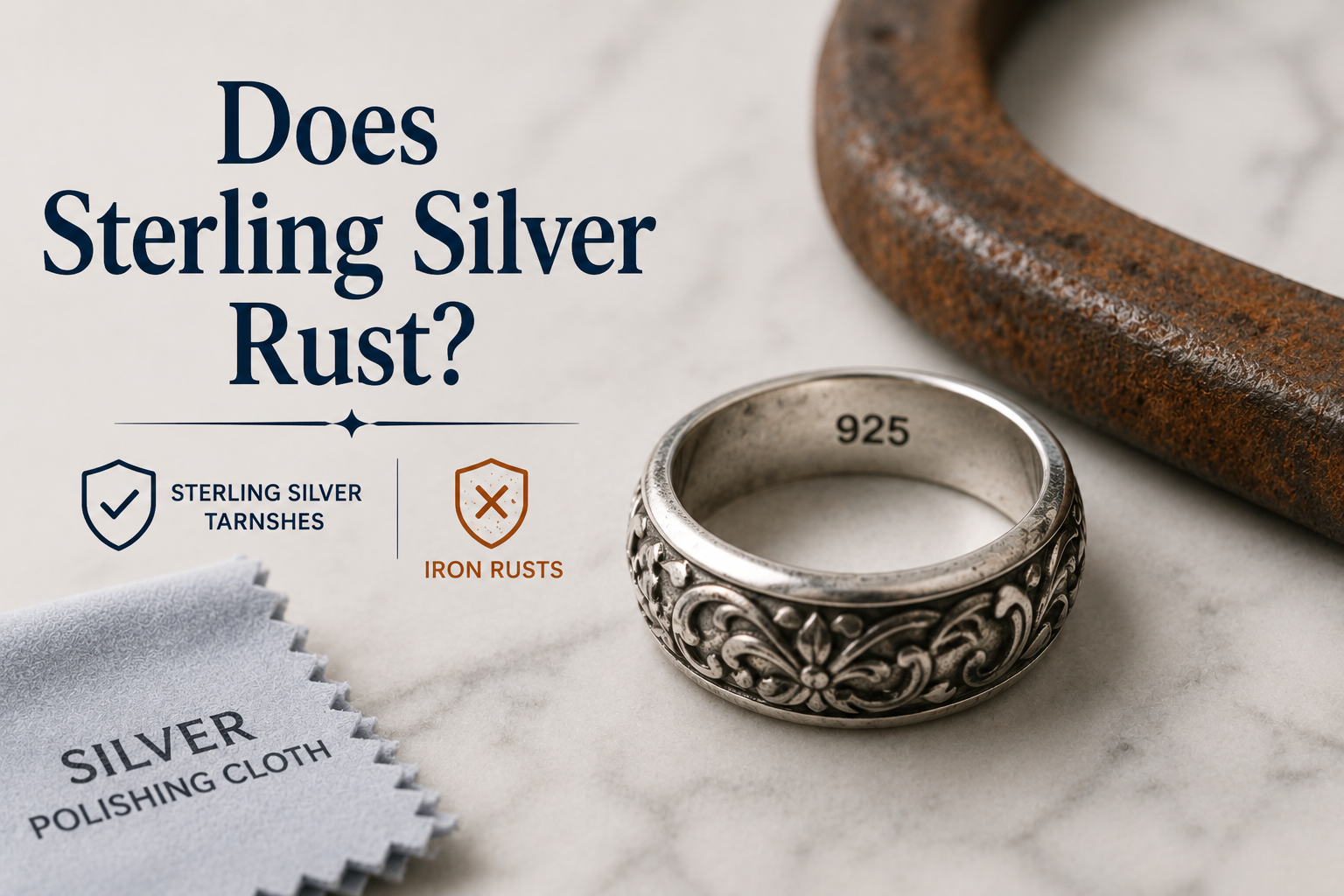
No, sterling silver does not rust in the conventional sense. Rust refers to corrosion products associated with iron and steel, while sterling silver typically develops tarnish instead. The black discoloration you see on 925 silver is commonly silver sulfide, not iron rust.
Sterling contains 92.5% silver and 7.5% other metals, commonly copper. Both silver and copper can participate in surface corrosion reactions, so sterling is not corrosion-proof. It simply corrodes differently from iron.
Here’s why sterling turns black, how water affects it, and what you can do to protect your jewelry.
Why Doesn’t Sterling Silver Rust?
Sterling silver does not form conventional rust because it is a silver alloy rather than an iron-based metal.
Standard sterling contains 92.5% silver, with the remaining 7.5% made from other metals, commonly copper. Neither silver nor copper produces the iron corrosion products commonly called rust.
That does not mean sterling cannot corrode. Silver reacts with sulfur-containing gases in the environment and forms a surface layer of tarnish.
This distinction explains why an old sterling ring may become black without developing the flaky orange-brown corrosion associated with rusting iron.
For more about the alloy, see our guide to what 925 sterling silver is.
Why Does Sterling Silver Turn Black?
Sterling silver usually turns black because it has tarnished.
Silver reacts with sulfur-containing gases such as hydrogen sulfide to form silver sulfide (Ag₂S). This corrosion product darkens the surface of the metal.
Conventional sterling also contains copper, and its tarnish can contain copper sulfide (Cu₂S) in addition to silver sulfide.
Tarnish does not always begin as black. Thin tarnish layers can appear yellow, red, blue, or iridescent because light reflects through the thin surface film. As the layer becomes thicker, it develops the dense black appearance commonly associated with tarnished silver.
That means dark jewelry is not automatically fake. Genuine 925 sterling can develop heavy black tarnish.
| Characteristic | Sterling Silver Tarnish | Iron Rust |
|---|---|---|
| Associated metal | Silver and sterling | Iron and steel |
| Typical products | Silver sulfide; copper sulfide can occur in sterling | Iron oxides and related compounds |
| Common appearance | Yellow, iridescent, gray to black | Orange, red or brown |
| Type of process | Corrosion | Corrosion |
| Same chemical reaction? | No | No |
Can Water Make Sterling Silver Rust?
No. Water does not make sterling silver develop iron rust.
Pure silver is relatively stable in ordinary air and water except when it encounters substances that react with it, particularly sulfur compounds. For sterling, the presence of copper makes the alloy more reactive than pure silver.
Humidity can still matter. When sulfur-containing pollutants are present, silver tarnishes faster as relative humidity rises.
For jewelry, the liquid surrounding the silver also matters. Swimming pools, cleaning solutions, soaps, and other products are chemically different from clean water and may affect the metal, gemstones, finishes, or other components.
Keeping sterling clean and dry before storage therefore helps reduce unnecessary surface reactions even though the metal does not rust.
Does Rust-Colored Discoloration Mean Sterling Is Fake?
No. Color alone is not enough to determine whether a piece is genuine sterling silver.
Sterling tarnish can display several colors as its surface layer develops. A reddish or unusual patch therefore needs more evidence before you can identify its cause.
Another possibility is plating wear. Silver-plated jewelry consists of a silver layer over another metal, and damage or wear can eventually reveal the material underneath.
Check the entire piece for identifying marks. 925, .925, and STERLING indicate a claimed sterling fineness of 92.5% silver, while terms associated with silver plating point to a different construction.
A stamp should still be treated as an identification clue rather than conclusive proof of authenticity. Use our sterling silver hallmarks guide to investigate unfamiliar markings.
How Do You Protect Sterling Silver From Corrosion?
Reduce its exposure to sulfur-containing pollutants, moisture, and unsuitable storage materials.
Store clean, dry sterling in a closed container when possible. The Canadian Conservation Institute recommends sealed storage for silver because it reduces exposure to tarnishing gases.
Some rubber, paints, wool, felt, and other materials can release sulfur-containing compounds, so avoid storing silver in direct contact with materials that may promote tarnishing.
Keeping humidity low also helps when sulfur pollutants are present. Appropriate tarnish-control materials can provide additional protection inside enclosed storage.
Avoid polishing sterling more often than necessary. Removing tarnish mechanically also removes a small amount of underlying silver, and repeated polishing can gradually soften engraved or decorative details.
Frequently Asked Questions
Does 925 sterling silver rust in water?
No. 925 sterling silver does not form conventional iron rust in water.
Moisture can still contribute to tarnishing when sulfur-containing pollutants are present. Dry jewelry thoroughly before storing it, especially after prolonged water exposure.
Is sterling silver waterproof?
“Waterproof” is not the most useful description for sterling silver. Clean water does not cause iron rust, but the alloy can still tarnish and react with substances in its environment.
Jewelry may also contain gemstones, adhesives, plating, or finishes that tolerate water differently from the sterling itself.
Can real sterling silver turn green?
Unusual green discoloration does not automatically prove that an item is fake. Sterling commonly contains copper, and copper-containing materials can develop green corrosion products under some conditions.
If the discoloration appears to come from exposed metal beneath a silver-colored surface, the item may instead be plated. Check its hallmarks and construction before drawing a conclusion.
The Bottom Line
If you’re asking does sterling silver rust, the answer is no in the conventional iron-rust sense. Sterling can still corrode, but its familiar black discoloration is usually sulfide tarnish rather than rust.
Keep sterling clean and dry, limit its exposure to sulfur-containing materials, and avoid unnecessary polishing. If unusual discoloration makes you question whether an item is genuine, compare its markings with our sterling silver hallmarks guide.