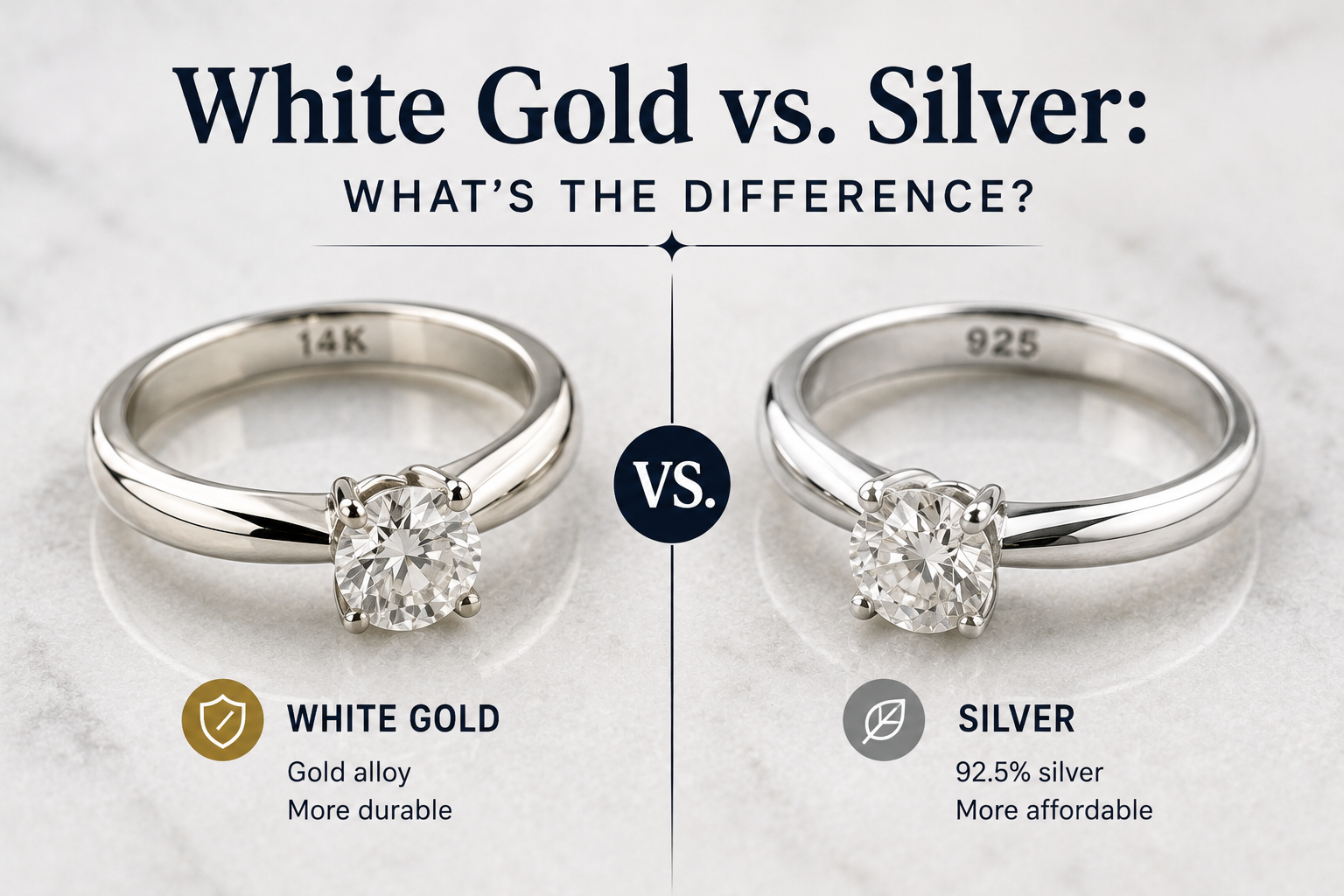
The main difference between white gold vs silver is the precious metal in the alloy: white gold is made from gold, while sterling silver contains 92.5% silver. White gold generally costs more and is better suited to rings that receive frequent wear, while sterling silver is more affordable and naturally bright white but scratches and tarnishes more easily.
The two metals can look very similar when polished, especially because white gold is often coated with rhodium to create a brighter white finish. Their composition, markings, maintenance, allergy considerations, and value are different enough that appearance alone is a poor way to identify them.
White Gold vs. Silver at a Glance
White gold generally offers better durability for daily-wear rings, while sterling silver offers a much lower entry price.
| Feature | Sterling Silver | White Gold |
|---|---|---|
| Main precious metal | Silver | Gold |
| Common purity | 92.5% silver | Commonly 14K or 18K |
| Typical marks | 925, .925, S925, STERLING | 14K, 18K, 585, 750 |
| Natural color | Bright white | White to slightly warm/gray depending on alloy |
| Rhodium plating | Sometimes | Common |
| Tarnishes? | Yes | Not like sterling silver |
| Scratch resistance | Lower | Generally higher |
| Typical maintenance | Tarnish removal and polishing | Possible rhodium replating |
| Relative cost | Lower | Higher |
| Best fit | Affordable jewelry, larger designs | Engagement rings, wedding bands, frequent wear |
Neither metal is automatically better. The right choice depends on budget, wear, maintenance preferences, and skin sensitivity.
What Is the Difference Between White Gold and Silver?
White gold and sterling silver are different alloys, even if they appear almost identical from across a jewelry counter.
Sterling silver contains:
92.5% silver + 7.5% other metals
The other 7.5% commonly includes copper. GIA describes sterling as 925 parts silver and 75 parts copper in a conventional formulation.
White gold starts with gold. Jewelers mix gold with other metals to reduce its yellow color and change properties such as hardness.
The gold percentage depends on karat:
| White Gold Purity | Approximate Gold Content |
|---|---|
| 10K | 41.7% |
| 14K | 58.3% |
| 18K | 75.0% |
GIA identifies nickel and palladium as common whitening metals and notes that other alloying metals may also be present.
That means two 14K white-gold rings can have the same gold percentage but differ in exact alloy composition, color, hardness, and skin compatibility.
For sterling’s composition in more detail, see what 925 sterling silver is.
Does White Gold Look Different From Silver?
Not always. Rhodium-plated white gold and polished sterling silver can look extremely similar.
Sterling silver naturally has a bright white metallic color.
White gold varies more because pure gold starts yellow. Alloying reduces that yellow tone, but the resulting alloy may still look slightly warm or gray.
Many manufacturers therefore coat white gold with rhodium, a bright white platinum-group metal. GIA says rhodium plating adds shine, a brighter white color, and surface scratch resistance.
The coating does not last forever. FTC materials document consumer complaints involving rhodium-coated white gold where the coating wore away and revealed a less-white gold substrate underneath.
That gradual warm or yellowish appearance does not mean the ring is fake. It can simply mean the rhodium layer needs renewal.
Sterling ages differently. Uncoated sterling can develop yellow, brown, gray, or black tarnish rather than exposing a warmer gold alloy underneath.
Is White Gold More Durable Than Sterling Silver?
For rings and other jewelry exposed to frequent wear, white gold is generally more durable than sterling silver.
GIA describes sterling silver as soft, scratch-prone, and less durable than metals commonly chosen for engagement and wedding rings. White gold, particularly 14K, is widely used for daily-wear jewelry because its alloy provides a useful balance of gold content and durability.
That does not mean every white-gold alloy has the same hardness.
Karat matters, but exact alloy composition and manufacturing treatment matter too. An 18K alloy contains more gold and is often softer than a comparable 14K alloy, but you should not treat that as an absolute rule for every formulation.
Rhodium plating adds another layer to the comparison. It creates a harder outer surface, but the plating eventually wears in high-contact areas.
Sterling can still work well for substantial rings, earrings, necklaces, and bracelets. It is simply less resistant to scratching and bending than white gold in many everyday jewelry applications.
Does White Gold Tarnish Like Silver?
No. White gold does not develop the same characteristic black silver-sulfide tarnish as sterling silver.
Sterling tarnishes because silver reacts with sulfur-containing substances in the environment. GIA notes that sterling silver tarnishes over time and can be restored with appropriate silver-care methods.
White gold behaves differently because its primary precious metal is gold rather than silver.
That does not make white gold maintenance-free. Its rhodium coating can wear, exposing a warmer underlying alloy. The alloying metals can also affect surface behavior depending on formulation.
The maintenance tradeoff is therefore different:
Sterling silver: remove tarnish and manage scratches.
Rhodium-plated white gold: maintain the rhodium finish as it wears.
Rhodium-plated sterling also exists. GIA notes that this coating can make sterling less likely to tarnish while the plating remains intact.
Is White Gold or Silver Better for Sensitive Skin?
Sterling silver is often the simpler choice for someone specifically trying to avoid nickel, but the exact alloy still matters.
AAD lists pure sterling silver among jewelry choices recommended for people with nickel allergy. Nickel is one of the most common causes of allergic contact dermatitis and is frequently found in jewelry.
White gold requires closer scrutiny because some white-gold alloys use nickel to whiten and strengthen the metal. Others use palladium instead.
Rhodium plating can place a barrier between the underlying alloy and your skin while the coating is intact, but that barrier can wear.
If you know you react to nickel, ask for the actual composition of the jewelry rather than relying on “white gold,” “silver,” or “hypoallergenic” as complete descriptions.
A 925 stamp identifies sterling fineness, but it does not provide a complete ingredient list for every clasp, solder joint, earring back, or coating in a finished piece.
Which Costs More: White Gold or Silver?
White gold generally costs much more than sterling silver because gold has a higher precious-metal value.
GIA describes silver as a much more affordable choice than white gold for jewelry.
The percentage of precious metal does not tell the whole story. Sterling contains 92.5% silver, while 14K white gold contains only about 58.3% gold, but the gold itself is far more valuable per unit of weight.
Silver prices change continuously:
[LIVE_PRICE_EMBED]
For sterling, theoretical silver content is:
item weight × 0.925
Finished jewelry can cost much more than raw metal value because price also reflects gemstones, labor, design, maker, brand, retail markup, and condition.
Use our live silver price when estimating the metal side of a sterling piece.
How Can You Tell White Gold From Silver?
Check the hallmarks first because color alone is unreliable.
GIA identifies 925, .925, and S925 as common sterling quality marks in the U.S. White gold is typically marked according to gold content, such as 14K or 18K, and may also use fineness numbers such as 585 or 750.
Common silver marks include:
925
.925
S925
STERLING
Common gold marks include:
10K
14K
18K
417
585
750
A 925 mark points to a sterling-silver fineness claim, not white gold.
Do not rely on a magnet. Neither gold nor silver is strongly magnetic, and many non-precious metals are also nonmagnetic.
If the marks are missing, worn, or contradictory, professional metal testing provides better evidence than color or magnetism.
See our sterling silver hallmarks guide for help interpreting silver markings.
Is White Gold or Silver Better for Rings?
White gold is generally the better choice for an engagement ring or wedding band that will receive frequent daily wear. Sterling silver is the more economical choice.
Rings take more abrasion and impact than many necklaces or earrings. They contact desks, handles, tools, bags, and other hard surfaces throughout the day.
GIA specifically presents white gold as a popular durable choice for engagement and wedding rings, while describing sterling silver as softer and more prone to scratching.
Sterling still makes sense for fashion rings, larger designs, or buyers who want a precious metal without the cost of gold.
Maintenance differs:
Sterling silver: expect tarnish and surface scratches.
White gold: expect possible rhodium replating if you want to maintain an evenly bright-white finish.
If the ring holds an expensive gemstone or is intended for decades of daily wear, white gold usually has the stronger practical case.
Frequently Asked Questions
Is white gold the same as silver?
No. White gold is a gold alloy, while sterling silver contains 92.5% silver.
They can look similar, especially when white gold has rhodium plating.
Which is better, white gold or sterling silver?
White gold is generally better for expensive rings and long-term daily wear. Sterling silver is better when affordability is the priority.
The better choice depends on budget, maintenance preferences, skin sensitivity, and how the piece will be worn.
Does white gold turn yellow?
Rhodium-plated white gold can appear warmer or more yellow as the bright-white coating wears and the underlying gold alloy becomes more visible. FTC materials specifically discuss this effect.
The gold has not necessarily changed composition; the surface coating has worn.
Does sterling silver look like white gold?
Yes. Polished sterling can look very similar to rhodium-plated white gold.
Hallmarks and professional testing are more reliable than visual inspection alone.
Is white gold more valuable than silver?
Generally, yes. White gold contains gold, which typically gives it a much higher raw precious-metal value than a comparable weight of sterling silver.
Finished jewelry value also depends on karat, weight, gemstones, maker, design, and condition.
The Bottom Line
In the white gold vs silver comparison, white gold generally offers better durability for frequently worn rings and carries substantially higher precious-metal value. Sterling silver costs less and has a naturally bright-white appearance, but it tarnishes and scratches more readily.
White gold is not maintenance-free because rhodium plating can wear and may need renewal. Sterling instead requires occasional tarnish removal and careful polishing.
If you are trying to identify an unknown white-metal piece rather than choose between the two, start with the markings. Our sterling silver hallmarks guide explains what common silver stamps mean.