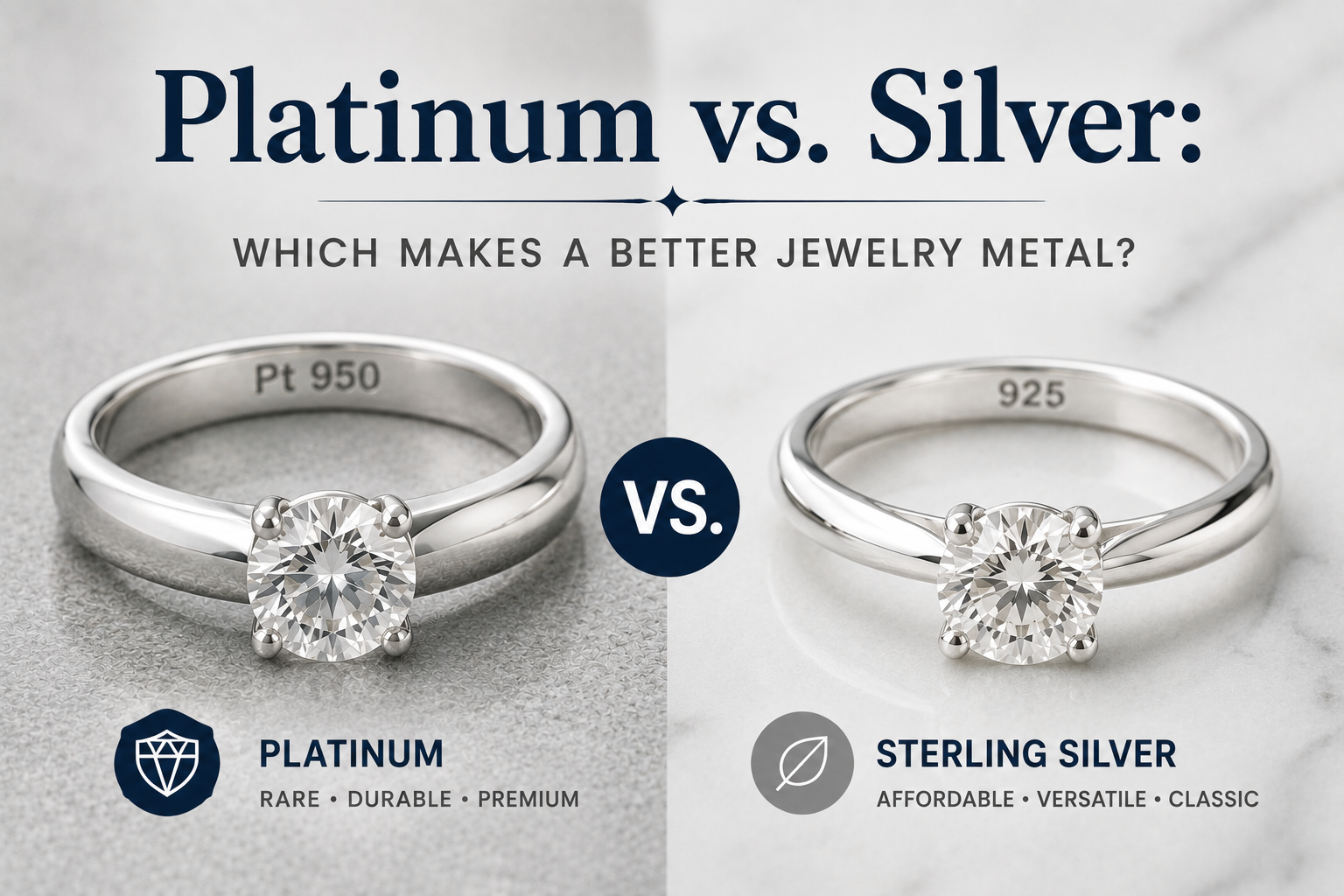
In the stainless steel vs sterling silver comparison, stainless steel is usually better for durability and low maintenance, while sterling silver is better if you want a precious metal with intrinsic silver value. Sterling contains 92.5% silver, while stainless steel is an iron-based alloy containing at least 10.5% chromium.
The two metals can look similar with a bright polished finish, but they behave differently over time. Stainless steel resists corrosion and discoloration well because chromium creates a protective passive layer. Sterling silver scratches more easily and develops characteristic silver tarnish.
The right choice depends on whether you care most about durability, maintenance, precious-metal value, or how the jewelry feels and looks.
Stainless Steel vs. Sterling Silver at a Glance
Stainless steel generally wins on durability and maintenance, while sterling wins on precious-metal content and intrinsic metal value.
| Feature | Sterling Silver | Stainless Steel |
|---|---|---|
| Main metal | Silver | Iron |
| Key composition | 92.5% silver | At least 10.5% chromium |
| Common marks | 925, .925, STERLING | Varies by manufacturer and grade |
| Precious metal? | Yes | No |
| Tarnishes? | Yes | Does not tarnish like silver |
| Corrosion resistance | Lower | High |
| Scratch resistance | Lower in many jewelry applications | Generally higher |
| Maintenance | Tarnish removal and polishing | Routine cleaning |
| Intrinsic metal value | Higher | Low in jewelry quantities |
| Ease of resizing | Generally easier | Can be more difficult |
| Best for | Precious-metal jewelry, gifts, collectible pieces | Hard-wearing, low-maintenance jewelry |
Neither is the better metal for every buyer.
What Is the Difference Between Stainless Steel and Sterling Silver?
The biggest difference is composition: sterling silver is a precious-metal alloy, while stainless steel is a family of iron-based alloys designed for corrosion resistance.
Sterling silver contains:
92.5% silver + 7.5% other metals
Copper commonly makes up much of the remaining 7.5%. FTC consumer guidance confirms that sterling silver contains 92.5% pure silver and may carry a 925 mark.
Stainless steel works differently. World Stainless defines stainless steel as a family of steels containing at least 10.5% chromium. Other elements, including nickel and molybdenum, may be added depending on the grade.
Chromium is particularly important because it allows a thin protective passive layer to form on the steel’s surface. That layer gives stainless steel much of its corrosion resistance.
For more on sterling’s composition, see what 925 sterling silver is.
Which Is More Durable: Stainless Steel or Sterling Silver?
Stainless steel generally handles rough daily wear better than sterling silver.
Sterling is relatively soft. Rings, chains, and clasps can accumulate scratches, dents, and deformation, especially when the design uses thin sections of metal.
Many stainless steels offer greater hardness and resistance to deformation. That makes stainless practical for casual jewelry exposed to frequent knocks and abrasion.
The comparison is not absolute. Stainless steel includes many grades with different mechanical properties, while thickness, shape, heat treatment, and surface finish also affect durability.
Stainless can still scratch. A polished steel ring will not stay mirror-finished indefinitely if you wear it against hard surfaces.
Sterling also remains durable enough for decades of use when the piece is well constructed and treated appropriately.
If your main priority is resisting everyday knocks rather than owning a precious metal, stainless steel generally has the advantage.
Does Stainless Steel Tarnish Like Sterling Silver?
No. Stainless steel does not develop the characteristic sulfide tarnish associated with sterling silver.
Sterling tarnishes when silver reacts with sulfur-containing substances in its environment. The resulting surface compounds can produce yellow, brown, gray, or black discoloration.
Stainless steel relies on a different protection mechanism.
Its chromium content creates a thin passive oxide film on the surface. World Stainless explains that this protective layer provides the alloy with its corrosion resistance.
That does not make stainless steel corrosion-proof.
Certain environments, including chloride-rich conditions, can cause staining or localized corrosion in stainless steels. Grade selection matters because different stainless alloys have different levels of corrosion resistance.
For normal jewelry care, however, stainless steel generally requires less attention than sterling because you do not need to remove silver tarnish.
Is Stainless Steel or Sterling Silver Better for Sensitive Skin?
Either can work for many wearers, but the exact alloy matters if you have a known metal allergy.
Nickel is one of the most common causes of allergic contact dermatitis. AAD reports that jewelry is a common source of nickel exposure.
Some stainless steels contain nickel, while others have different compositions. That means the word stainless alone does not tell you whether a piece is suitable for someone with a specific allergy.
AAD lists surgical-grade stainless steel among jewelry choices for people trying to avoid nickel-related symptoms. It also lists pure sterling silver.
Do not assume that every product advertised as “surgical steel” or “hypoallergenic” has the same composition. If you have a diagnosed metal allergy, check the product specifications and manufacturer information.
Finished jewelry can also contain clasps, solder, posts, backs, or decorative parts made from different materials.
For sensitive skin, verified composition matters more than choosing one broad metal category over the other.
Which Is More Valuable: Stainless Steel or Sterling Silver?
Sterling silver has substantially more intrinsic precious-metal value because 92.5% of the alloy is silver.
For example, a 20-gram sterling item contains approximately:
20 × 0.925 = 18.5 grams of silver
At current silver spot prices:
[LIVE_PRICE_EMBED]
The theoretical metal-value formula is:
weight in grams × 0.925 ÷ 31.1035 × silver spot price
Stainless steel does not have comparable precious-metal melt value in ordinary jewelry quantities.
That does not mean every sterling piece sells for more than every stainless piece. Brand, design, craftsmanship, gemstones, and retail markup can make a designer stainless-steel item cost more than a simple sterling piece.
For raw metal content, however, sterling has the clear advantage.
Use our live silver price when estimating the contained silver value of sterling jewelry.
Which Looks Better: Stainless Steel or Sterling Silver?
Both can look bright and polished, so appearance comes down largely to personal preference and surface finish.
Sterling silver naturally has a bright white metallic appearance.
Stainless steel can appear slightly grayer, although a highly polished stainless surface can also be bright and reflective.
Manufacturers can further change either appearance through brushing, polishing, coatings, oxidation, or other finishes.
Wear creates another difference.
Uncoated sterling gradually tarnishes unless it is cleaned or stored under conditions that slow the reaction. Stainless steel generally keeps a more consistent color, although its surface can become scratched, stained, or duller.
Color alone is not a reliable way to identify an unknown piece.
Is Stainless Steel Better for Everyday Jewelry?
Stainless steel is often the easier option for hard-wearing, low-maintenance everyday jewelry.
Its combination of corrosion resistance and durability works well for:
- Casual rings
- Chains
- Bracelets
- Watch cases and bands
- Travel jewelry
- Jewelry exposed to frequent handling
Sterling is also suitable for everyday wear if you prefer a precious metal and are willing to give it more care.
The tradeoff is straightforward:
Stainless steel: greater corrosion resistance, less tarnish maintenance, lower intrinsic metal value.
Sterling silver: precious-metal value, traditional jewelry appeal, more scratching and tarnish care.
If you expect a piece to receive heavy wear, stainless often makes practical sense. If the material itself matters to you, sterling has the advantage.
Is Sterling Silver Better for Gifts?
Sterling silver often makes more sense when you want the gift itself to be made from a recognized precious metal.
FTC guidance recognizes sterling silver as a defined precious-metal composition containing 92.5% silver.
That can make sterling appealing for birthdays, anniversaries, keepsake jewelry, and pieces intended to retain some intrinsic metal value.
Stainless steel has different strengths. It costs less, resists corrosion, and requires less tarnish care.
For someone who wants jewelry they can wear frequently without much maintenance, stainless can be the more practical gift.
For someone who values precious-metal content, traditional silver jewelry, or collectible makers, sterling is usually the stronger fit.
Can You Tell Stainless Steel From Sterling Silver by the Stamp?
Markings are one of the best places to start, but not every piece carries a useful mark.
Common sterling marks include:
925
.925
STERLING
S925
FTC guidance confirms that 925 means 925 parts per thousand silver.
Stainless markings are less standardized for jewelry. You may encounter STAINLESS, a grade designation, or a manufacturer’s mark, but the absence of a specific grade stamp does not establish composition.
Do not rely on magnetism.
World Stainless notes that austenitic stainless steels are normally nonmagnetic in their as-delivered condition, while ferritic, martensitic, and duplex stainless steels are magnetic.
Sterling is not strongly magnetic either, so a piece that does not stick to a magnet has not been proven to be silver.
For valuable or questionable jewelry, professional metal analysis provides stronger evidence.
Use our sterling silver hallmarks guide to interpret common silver markings.
Is Stainless Steel or Sterling Silver Better for Rings?
Stainless steel is often better for an inexpensive hard-wearing ring, while sterling is better if you want precious-metal content and easier traditional jewelry work.
Stainless steel’s durability and corrosion resistance make it practical for casual bands and rings that receive frequent wear.
Sterling is softer and accumulates scratches more readily, but many jewelers can polish, repair, and resize conventional sterling rings using familiar silverworking techniques.
Stainless steel can be more difficult to resize or repair because its properties and construction may require different equipment and methods. Whether resizing is practical depends on the particular ring.
That difference matters if you expect your ring size to change.
For a low-maintenance fashion band, stainless steel is a strong option. For a silver ring you may want repaired, modified, or retained as a precious-metal piece, sterling often makes more sense.
Frequently Asked Questions
Is stainless steel better than sterling silver?
Stainless steel is generally better for corrosion resistance, rough wear, and low maintenance. Sterling silver is better if you want genuine precious-metal content and intrinsic silver value.
Neither is better for every buyer.
Does stainless steel tarnish?
Stainless steel does not develop silver’s characteristic sulfide tarnish.
Its chromium-rich passive layer gives it high corrosion resistance, although staining and corrosion can still occur under sufficiently aggressive conditions.
Is stainless steel cheaper than sterling silver?
Generally, yes, particularly when comparing raw metal value.
Sterling contains 92.5% silver, while stainless steel is primarily an iron-chromium alloy. Finished retail prices can still vary because of brand, design, craftsmanship, and other materials.
Is stainless steel magnetic?
It depends on the type.
Ferritic, martensitic, and duplex stainless steels are magnetic, while austenitic stainless steels are normally nonmagnetic in their as-delivered condition.
That is why a magnet is not a reliable way to distinguish all stainless steel from sterling.
Which is better for sensitive skin: stainless steel or sterling silver?
Both can work, depending on composition and the individual’s sensitivity.
AAD lists surgical-grade stainless steel and pure sterling silver among jewelry choices for people trying to avoid nickel exposure. If you have a known allergy, verify the actual composition of the finished jewelry.
The Bottom Line
In the stainless steel vs sterling silver comparison, stainless steel is usually the better choice for durability, corrosion resistance, and low-maintenance daily wear. Sterling silver is the stronger choice if you want a recognized precious metal with intrinsic silver value.
Stainless steel does not develop silver’s characteristic tarnish and generally handles rough wear better. Sterling requires more care but offers precious-metal content, established silver hallmarks, and easier valuation based on silver weight.
If you are trying to identify an unknown piece rather than choose between the two, start with its markings. Our sterling silver hallmarks guide explains common 925 and other silver stamps.