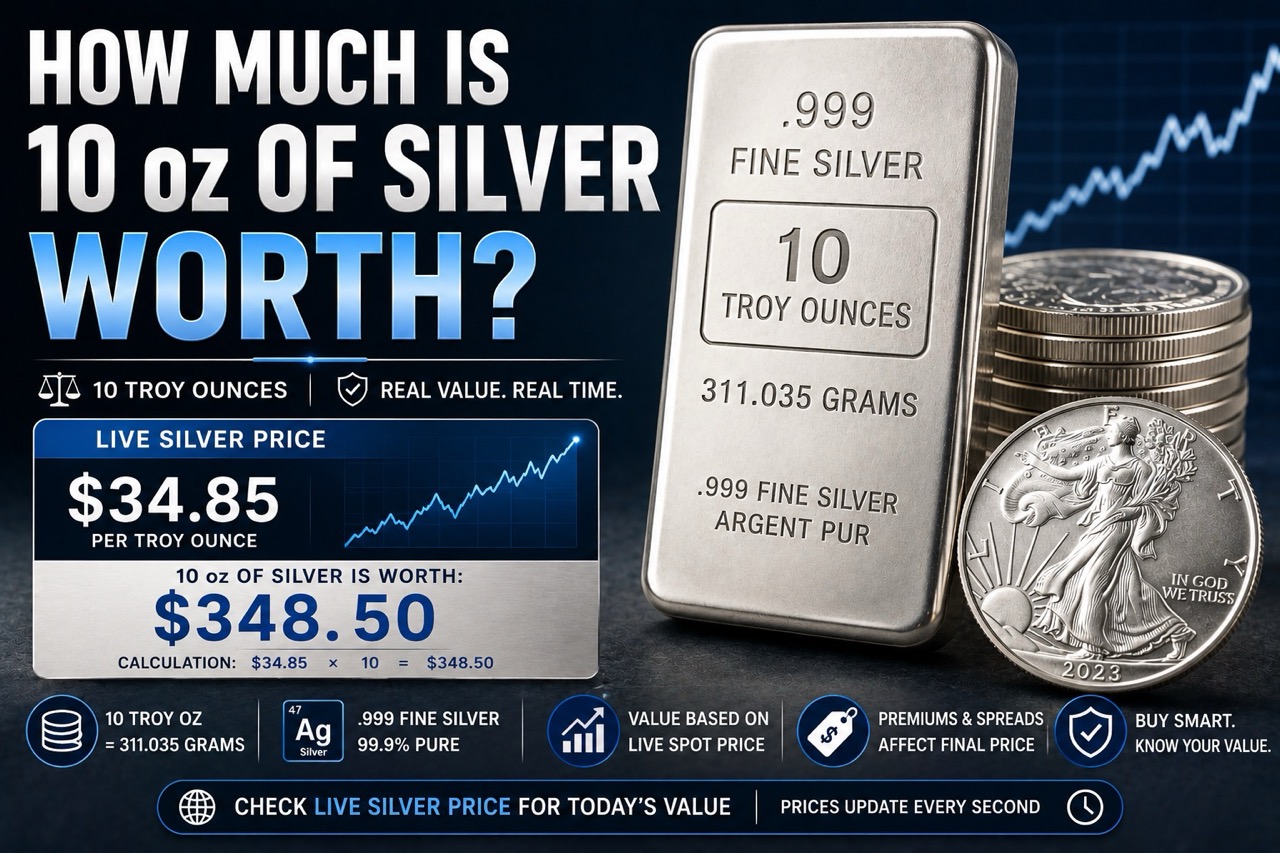
Ten troy ounces of fine silver are worth 10 times the current silver spot price per troy ounce. Silver markets use troy ounces, so the calculation is simply the current spot price multiplied by 10.
A physical 10 oz silver bar can have a different retail or resale price. Dealers may add a premium when selling bullion, while their buyback bids depend on the product, current demand, inventory, and market conditions.
If you’re checking how much is 10 oz of silver worth today, use the live calculator below.
[LIVE_PRICE_EMBED]
How Do You Calculate the Value of 10 oz of Silver?
Multiply the current silver spot price per troy ounce by 10 when you have 10 fine troy ounces of silver.
The formula is:
10 × current silver spot price = theoretical silver value
Precious metals use the troy weight system. CME silver contracts, for example, quote silver in U.S. dollars and cents per troy ounce.
NIST gives the conversion:
1 troy oz = 31.1034768 grams
Therefore:
10 troy oz = 311.034768 grams
Use our live silver price rather than a fixed dollar figure because silver prices change throughout the trading day.
How Much Is a 10 oz Silver Bar Worth?
A 10 oz silver bar’s underlying value starts with its stated fine-silver content and the current spot price.
For a bullion product specified as containing 10 troy ounces of silver:
10 × spot price = theoretical contained-silver value
The actual price can differ.
When buying, you may see:
spot-based value + dealer premium
When selling, the dealer provides a bid that can differ from both spot and the retail asking price.
That means three figures can exist at the same time:
| Value | What It Represents |
|---|---|
| Spot-based value | Market reference for the silver content |
| Retail price | What a seller charges for the physical bar |
| Buyback price | What a dealer offers to purchase the bar |
Do not assume the spot-based figure is a guaranteed transaction price.
What Does .999 Fine Mean on a 10 oz Silver Bar?
A .999 fine marking means the silver has a fineness of 999 parts per 1,000, or 99.9%.
You should read that marking together with the bar’s stated weight or fine-silver specification.
For example, a bullion product may be marked to indicate a guaranteed quantity of silver along with minimum fineness. In that situation, use the manufacturer’s stated fine-metal content rather than automatically multiplying the advertised 10 oz by .999.
This distinction prevents a common calculation error.
A literal piece of metal weighing exactly 10 troy oz at .999 fineness would mathematically contain:
10 × .999 = 9.99 fine troy oz silver
But that calculation should not automatically be applied to a commercial bar sold and specified as containing 10 troy oz of silver.
Check the inscriptions and manufacturer’s specifications when valuing a specific bar.
Why Can a 10 oz Silver Bar Cost More Than Spot?
Physical bullion can cost more than its spot-based silver value because producing and selling a bar involves costs beyond the raw metal.
The amount charged over the underlying silver value is generally called a premium.
Premiums can reflect:
- Refining and fabrication
- Minting or casting
- Distribution
- Shipping
- Dealer overhead
- Inventory conditions
- Market demand
- Dealer margin
Premiums are not fixed.
Two 10 oz bars with equivalent silver content can carry different retail prices because of manufacturer, product type, availability, or buyer demand.
For that reason, compare the price per fine troy ounce when evaluating physical silver products.
How Much Can You Sell 10 oz of Silver For?
The amount you can sell 10 oz of silver for depends on the buyer’s current bid, not simply the retail price or spot quote.
Dealers generally maintain different buying and selling prices. The difference between them is part of the market spread.
A buyback offer can depend on:
- Current spot price
- Fine-silver content
- Refiner or mint
- Product type
- Condition
- Quantity
- Dealer inventory
- Local demand
- Ease of authentication
Calculate the metal value before requesting offers. That gives you a consistent reference point for comparing buyers.
For 10 fine troy ounces:
metal value reference = 10 × current spot price
Is 10 oz of Silver the Same as 10 Regular Ounces?
No. Ten troy ounces weigh more than 10 ordinary avoirdupois ounces.
NIST gives one troy ounce as 31.1034768 grams.
| Weight | Approximate Grams |
|---|---|
| 1 troy oz | 31.1035 g |
| 10 troy oz | 311.035 g |
| 1 ordinary oz | 28.3495 g |
| 10 ordinary oz | 283.495 g |
This distinction matters if you weigh silver yourself.
A household scale displaying 10 ordinary ounces does not indicate 10 troy ounces of silver.
If your scale supports grams, weigh the object in grams and divide by 31.1035 to convert it to troy ounces.
How Much Is 10 oz of Sterling Silver Worth?
Ten troy ounces of .925 sterling material contain 9.25 troy oz of silver by specification.
Sterling silver consists of:
92.5% silver + 7.5% other metals
Therefore:
10 × .925 = 9.25 troy oz silver
The theoretical silver melt value is:
9.25 × current silver spot price
This is lower than the contained-silver value of 10 fine troy ounces.
For sterling items measured in grams, use:
spot price ÷ 31.1035 × .925 = theoretical silver value per gram
Our sterling silver calculator can handle this calculation for jewelry, flatware, and other 925 silver items.
A scrap buyer’s actual offer may be lower because refining, testing, and business costs affect buyback prices.
Does the Type of 10 oz Silver Bar Affect Its Value?
Yes. Products containing the same amount of silver can have different market prices.
Ten-ounce silver products include cast bars, minted bars, and older secondary-market bars.
The metal value may be similar when their fine-silver content is the same, but premiums can differ based on:
- Manufacturer
- Product availability
- Collectibility
- Condition
- Recognition
- Current demand
Some older or discontinued bars can attract collectors and trade above ordinary bullion premiums.
For basic valuation, calculate the silver content first. Treat any collectible premium as a separate component.
How Does a 10 oz Bar Compare With Other Silver Bar Sizes?
A 10 oz bar provides a middle ground between small one-ounce products and larger kilo or 100 oz bars.
Larger bars can sometimes carry lower premiums per ounce because fewer individual products need to be fabricated and handled. That relationship is not guaranteed, so compare actual dealer prices.
Smaller units provide more flexibility when selling.
For example, five separate 10 oz bars allow you to sell 10 or 20 oz while keeping the remainder. One 50 oz product would generally require selling the entire bar.
Compare bar sizes using:
total purchase price ÷ fine troy ounces = effective price per ounce
That makes products with different weights easier to compare.
Frequently Asked Questions
What is the 10 oz silver value today?
For 10 fine troy ounces, multiply the current silver spot price by 10.
Use the live silver price or calculator above for the current figure.
How much is a 10 oz silver bar worth?
Its underlying metal value is based on its stated fine-silver content and the current silver spot price.
Retail premiums and dealer buyback spreads can make the actual transaction price different.
How many grams are in 10 oz of silver?
Ten troy ounces equal approximately 311.035 grams. NIST gives one troy ounce as exactly 31.1034768 grams.
How much is 10 oz of 925 silver worth?
Ten troy ounces of .925 sterling contain:
10 × .925 = 9.25 troy oz silver
Multiply 9.25 by the current spot price to estimate theoretical contained-silver value.
Is a 10 oz silver bar exactly 10 troy ounces?
Check the bar’s markings and manufacturer specifications.
A commercial 10 oz bullion product should be valued according to its stated weight and fine-silver content rather than assumptions based only on the .999 marking.
The Bottom Line
If you’re asking how much is 10 oz of silver worth, multiply the current spot price by 10 for 10 fine troy ounces of silver. Ten troy ounces equal approximately 311.035 grams.
A physical bar’s retail or resale price can differ from that figure because premiums, spreads, manufacturer, and market demand affect actual transactions.
Use our live silver price and the calculator above to check the current metal value before comparing buy or sell offers.