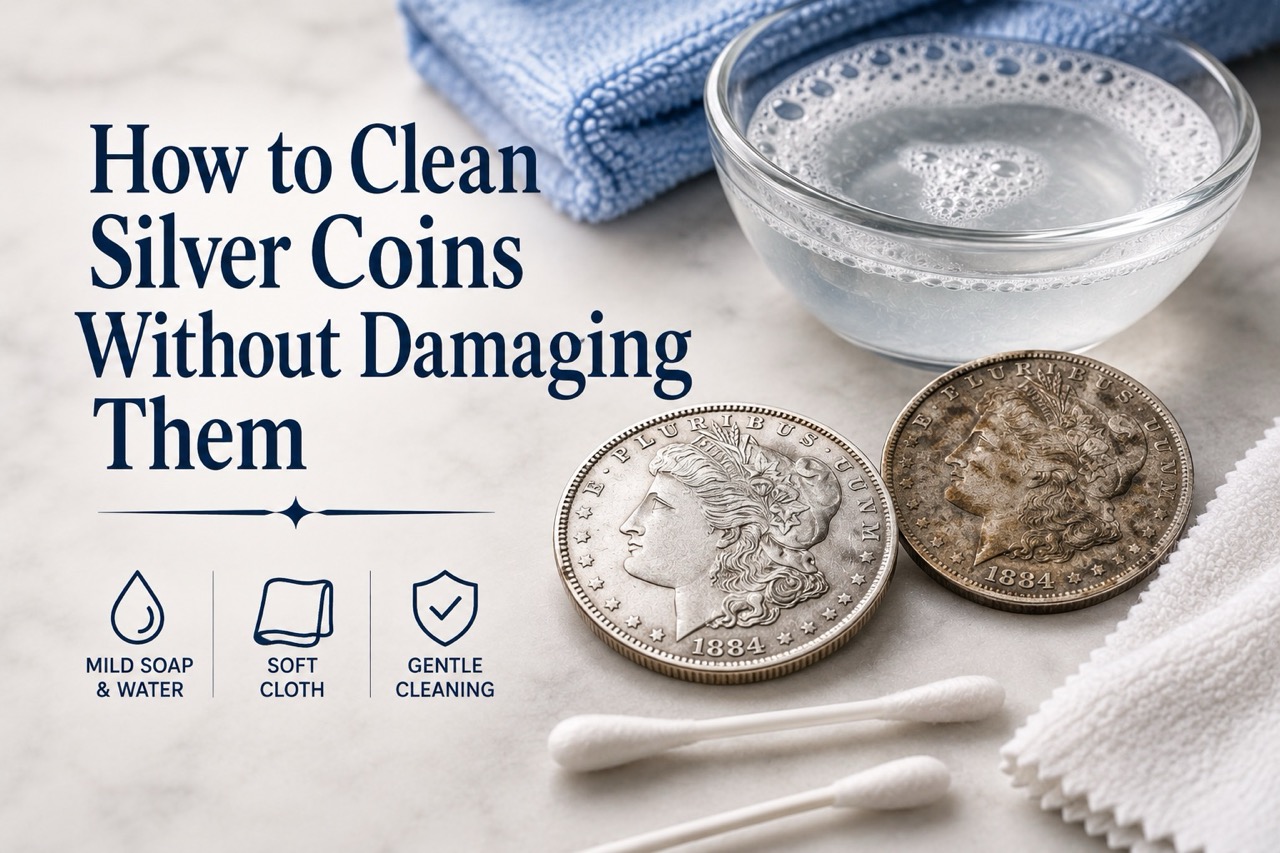
If a silver coin might be collectible, the safest way to clean it is usually not to clean it yourself. Polishing, scrubbing, abrasive cleaners, and unsuitable chemical treatments can permanently alter a coin’s surface and reduce its collector value.
A coin does not need to look bright to be valuable. Natural toning can be acceptable or even desirable to collectors, while an improperly polished coin may receive a Details designation from a professional grading service.
Before learning how to clean silver coins, determine whether cleaning is necessary at all. If you do not know the coin’s rarity or value, identify it before changing its surface.
Should You Clean Silver Coins?
Do not clean a potentially collectible silver coin before identifying and evaluating it.
Collectors consider much more than silver content. Date, mint mark, rarity, grade, surface condition, originality, and market demand can all affect a coin’s numismatic value.
Cleaning can permanently change those surfaces. Abrasive rubbing can leave fine scratches called hairlines, while harsh polishing can alter the texture and luster of the metal.
Professional grading services take these changes seriously. PCGS identifies harsh cleaning or polishing as a problem that can result in a Details grade rather than a standard numerical grade. NGC likewise lists improper cleaning among the conditions that can lead to Details Grading.
Cleaning damage cannot simply be reversed. Once abrasion or another destructive treatment removes or changes the original surface, later toning does not restore it.
That means an old, dark coin should not automatically be “cleaned up” before appraisal or sale.
When Is It Safe to Clean a Silver Coin?
Home cleaning makes the most sense only when you know the coin has no meaningful collector premium and you have a specific reason to remove surface dirt.
Even then, cleaning is often unnecessary.
A common silver coin held primarily for its metal content contains the same amount of silver whether its surface is bright, gray, or toned. Making it shinier does not increase its precious-metal content.
[LIVE_PRICE_EMBED]
Before touching the surface, ask:
- Could this coin have collector value? If you do not know, identify it first.
- Is the material on the surface normal toning or an unwanted contaminant? They are not the same thing.
- Does anything actually need to be removed? Appearance alone is not a good reason to alter a coin.
Some contaminants do deserve attention. PVC residue, adhesives, and other substances can damage a coin if left untreated.
For a valuable coin, however, those problems are reasons to consider professional conservation rather than experimental home cleaning.
How Do You Handle a Silver Coin Without Damaging It?
Handle a collectible coin by its edges and avoid touching its faces.
The U.S. Mint recommends holding coins by the edges because fingerprints and natural skin oils can affect the surface.
Work over a soft, clean surface so an accidental drop is less likely to cause damage.
For collectible coins:
- Hold the coin by its edge
- Avoid rubbing either face
- Do not wipe away fingerprints
- Keep food and drinks away
- Avoid talking directly over exposed coins
- Use coin-safe storage materials
- Avoid PVC-containing holders
If a common, non-collectible coin needs simple washing, the U.S. Mint recommends mild soap and water and warns against brushing or rubbing the surface.
The important distinction is that this is not a method for making collectible coins shiny. If the coin might have numismatic value, leave it untreated until you know what you have.
Why Shouldn’t You Polish Silver Coins?
Polishing can alter the microscopic surface that collectors and professional graders evaluate.
Silver polish removes tarnish through chemical action, abrasion, or a combination of processes. Conservation guidance for silver objects confirms that polishing can remove underlying silver along with the tarnish.
On household silver, that loss may be acceptable in controlled cleaning. On a collectible coin, surface alteration can directly affect numismatic desirability.
Scrubbing and polishing can leave hairlines. A heavily polished coin can also develop an unnaturally bright or altered appearance.
PCGS identifies abrasive cleaning as a reason a coin may receive a Details grade. NGC states that improper cleaning can forcibly remove surface metal and that this damage cannot simply be undone.
Avoid using:
- Silver polish
- Polishing cloths
- Toothpaste
- Baking soda as a scrubbing powder
- Scouring powders
- Steel wool
- Metal polish
- Pencil erasers
- Buffing wheels
- Abrasive brushes
Do not polish a coin before selling it. Making an old coin brighter can reduce rather than increase its collector appeal.
Can You Clean Silver Coins With Baking Soda and Aluminum Foil?
Do not use baking soda and aluminum foil on a potentially collectible silver coin.
Electrochemical processes can remove silver sulfide tarnish from silver objects. That does not make them appropriate for numismatic surfaces.
Removing toning changes the coin’s appearance. On collectible coins, original surface characteristics are part of what collectors and graders evaluate.
Scrubbing a coin with baking soda creates an additional problem because it introduces abrasion.
Chemical silver dips also deserve caution. A treatment can successfully remove tarnish while still leaving a surface that collectors consider altered.
A method that works on silver flatware should not automatically be transferred to coins.
Can You Clean Silver Coins With Vinegar?
Vinegar is not an appropriate default cleaner for collectible silver coins.
Vinegar contains acetic acid. Using an acidic household solution introduces a chemical treatment that can change material on a coin’s surface.
Adding salt, baking soda, or abrasive rubbing does not make the process safer for numismatic surfaces.
For a common bullion-value coin, vinegar still offers little financial benefit. The treatment cannot increase the coin’s silver content, and changing its appearance may make it less desirable to a future buyer.
If the coin might be collectible, leave the vinegar in the kitchen.
Does Tarnish Reduce a Silver Coin’s Value?
Tarnish does not automatically reduce value, and removing it can cause more harm than leaving it alone.
Coin collectors commonly refer to naturally developed surface coloration as toning. Toning can range from gray or black to multicolored effects depending on the coin and its environment.
Its effect on value is not uniform. NGC notes that some toning can be attractive and desirable, while unattractive toning can reduce eye appeal.
The key point is that bright does not automatically mean better.
An old coin with natural surfaces can be more desirable than the same type of coin after harsh polishing. Conversely, severe environmental damage can also hurt a coin’s grade and value.
Do not try to determine whether toning is “good” or “bad” by cleaning it off. Identify and evaluate the coin in its existing condition first.
What’s the Difference Between Coin Cleaning and Coin Conservation?
Professional conservation targets specific contaminants while trying to preserve the coin’s original surface; amateur cleaning often focuses on making a coin look brighter.
NGC describes numismatic conservation as controlled treatment of problems such as PVC residue, glue, soils, encrustation, haze, and certain types of toning.
Professional conservation does not mean every damaged coin can be restored. Scratches, wear, corrosion, and previous destructive cleaning may be irreversible.
That distinction matters when you see green, sticky, or unusual material on a coin. For example, PVC contamination from unsuitable plastic holders can continue damaging a coin’s surface.
Trying to scrub that contamination away yourself may add scratches to an existing problem.
For a potentially valuable coin with unusual residue or active surface problems, professional conservation is the safer route.
How Should You Store Silver Coins After Handling Them?
Store collectible coins in materials designed for coin preservation and keep them in a stable, dry environment.
The U.S. Mint recommends coin holders made without PVC because PVC can damage coin surfaces over time.
Suitable options include coin capsules and other holders specifically intended for numismatic storage. Higher-value certified coins are commonly encapsulated in sealed grading-service holders.
Keep coins cool and dry and minimize unnecessary handling. Avoid household tape, glue, and improvised plastics.
Storage matters because preventing contamination is far safer than trying to remove it later.
Frequently Asked Questions
What is the safest way to clean old silver coins?
For an old coin that might have collector value, the safest approach is usually not to clean it yourself.
Identify and evaluate the coin first. If it has harmful contamination, professional numismatic conservation may be appropriate.
Does cleaning silver coins decrease their value?
It can. Abrasive or otherwise improper cleaning can leave hairlines, alter luster, remove original surface material, and result in a Details designation from a professional grading service.
The exact financial effect varies with the coin, rarity, demand, and severity of the cleaning.
How do you clean silver coins without losing value?
There is no home cleaning method that guarantees a collectible coin will retain its grade or market value.
If preservation of value is your priority, avoid cleaning potentially collectible coins yourself. Have unusual contamination evaluated by a numismatic professional.
Should old silver coins be shiny?
No. An old silver coin does not need to look bright to be genuine or valuable.
Natural toning is common, and some toned coins are desirable to collectors. An unnaturally polished appearance can instead indicate previous cleaning.
The Bottom Line
Knowing how to clean silver coins starts with knowing when not to clean them. If a coin might have numismatic value, preserve its existing surface and identify it before using polish, abrasives, chemical dips, vinegar, baking soda, or other household treatments.
For common coins valued mainly for their silver content, cleaning usually provides no financial advantage. If a valuable coin has PVC, adhesive, or another potentially damaging contaminant, professional conservation is preferable to scrubbing it yourself.
To understand the metal-value side of a common silver coin, check our live silver price before comparing its melt value with any potential collector premium.